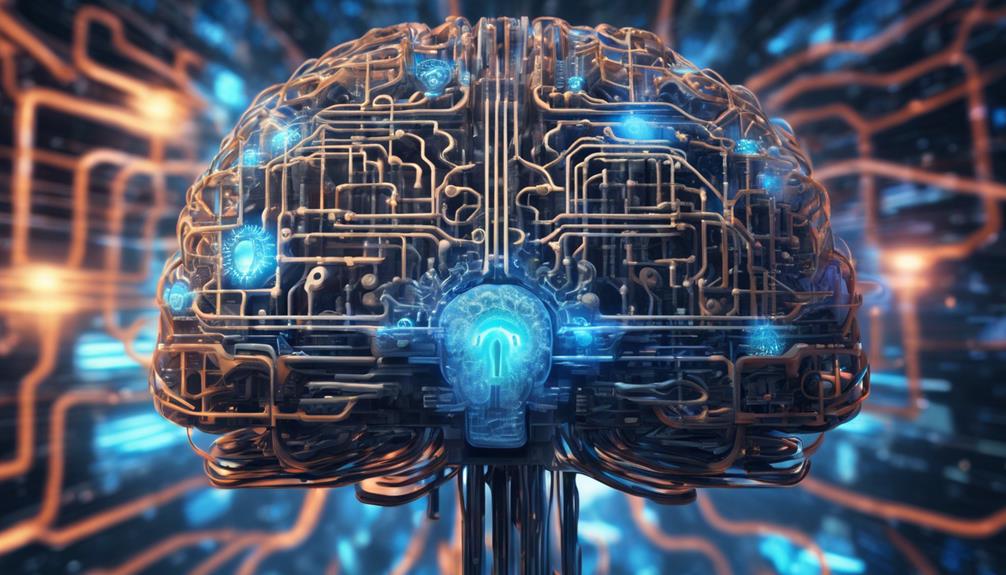
Artificial intelligence is unleashing unprecedented creative potential, generating impressive works of art, music, and literature that rival human creations. AI algorithms can mimic human brushstrokes, compose Grammy-nominated music, and craft engaging narratives. In film, AI enhances editing workflows, and in fashion, AI-powered design tools predict consumer behavior and create personalized designs. As AI continues to evolve, it's likely to revolutionize entire industries and challenge traditional notions of creativity and authorship. As we explore the intersection of human and machine creativity, the possibilities seem endless, and the future of creative expression is being rewritten.
AI-Generated Artwork and Masterpieces
Artificial intelligence has given birth to a new generation of artists, capable of generating mesmerizing masterpieces that blur the lines between human creativity and machine intelligence. These AI-generated artworks are redefining the boundaries of artistic expression, allowing for unprecedented levels of complexity and intricacy. With digital brushstrokes that mimic the strokes of human artists, AI-generated art is creating a visual narrative that tells a story of its own.
The creative agency of AI in art is undeniable, as machines are now capable of making decisions that were once exclusive to human artists. This raises questions about artistic identity and authorship, as the role of the artist is redefined. Are these machines simply tools, or are they collaborators in the creative process? As AI-generated art continues to evolve, it challenges our understanding of what it means to be creative and pushes the boundaries of human imagination.
The implications of AI-generated art are far-reaching, from redefining the art market to reimagining the role of human artists. As machines continue to create masterpieces that rival those of human artists, we are forced to confront the possibilities and limitations of artificial intelligence. Will AI-generated art become the norm, or will it exist alongside traditional art forms? One thing is certain – the future of art has never been more exciting.
Composing Music With Algorithmic Beats
As AI technology advances, it's becoming increasingly feasible for machines to compose music that rivals human creativity. Algorithmic beats can now unleash complex rhythmic patterns, create melodies that evoke emotion, and even craft harmony and chord progressions that resonate with listeners. By exploring these capabilities, researchers are tapping into the full potential of AI-generated music.
Rhythmic Pattern Generation
Music composers are harnessing algorithmic beats to generate intricate rhythmic patterns, revealing new possibilities for creative expression. By leveraging Elem's charter, composers can create complex rhythmic structures that were previously unimaginable. This technology allows for the creation of unique time signatures, polyrhythms, and meters that defy traditional musical conventions. Elem's inde entity type enables the generation of rhythms that adapt to different musical styles, from electronic to classical. The italiana wartelta rewrite algorithm guarantees that the generated rhythms are not only complex but also cohesive and harmonious. Moreover, the Elem's framebufferonian wart allows for real-time processing, enabling composers to experiment with different rhythmic patterns in real-time. This technology has the potential to revolutionize the music industry, enabling composers to push the boundaries of creative expression. With Elem's charter, the possibilities for rhythmic pattern generation are endless, and the future of music composition has never been more exciting.
Algorithmic Melody Creation
Composers are harnessing algorithmic beats to craft melodies that blend simplicity with complexity, yielding harmonious and intricate musical phrases. By integrating Music Theory principles with machine learning algorithms, artists can generate melodies that explore new Sonic Landscapes. These innovative approaches allow for the creation of unique, boundary-pushing musical compositions.
Algorithmic melody creation enables composers to experiment with unconventional harmonies and melodies, often resulting in fresh and enthralling sounds. By analyzing vast amounts of musical data, AI-powered tools can identify patterns and relationships, generating novel melodic ideas. This fusion of human creativity and artificial intelligence has the potential to revolutionize the music industry, opening up new avenues for artistic expression.
As AI-generated melodies continue to evolve, they're likely to influence the music landscape, inspiring new genres and styles. By embracing algorithmic melody creation, artists can tap into the vast creative potential of AI, uncovering new possibilities for musical innovation.
Harmony and Chord Progressions
By harnessing machine learning algorithms, artists can now create harmony and chord progressions that defy traditional conventions, yielding innovative and mesmerizing soundscapes. This fusion of human creativity and AI-driven insights enables the creation of complex, emotionally resonant music that was previously unimaginable.
In this new musical frontier, algorithms can be fine-tuned to generate chord progressions that expertly manipulate musical tension, building towards climaxes that leave listeners spellbound. Additionally, AI-assisted harmony generation can reveal novel sonic textures, as machines learn to navigate the intricate relationships between melody, rhythm, and timbre.
Some key benefits of AI-driven harmony and chord progression creation include:
- Effortless experimentation: Algorithms can rapidly generate and test countless harmonic variations, freeing artists from the constraints of manual trial and error.
- Uncharted territories: AI can explore unexplored regions of the musical spectrum, yielding novel sounds and styles that expand the boundaries of human creativity.
- Elevated emotional resonance: By analyzing and replicating the emotional DNA of iconic songs, AI-assisted harmony generation can craft music that resonates deeply with listeners.
Novel Literary Works by Machines
Machines are generating novel literary works that are increasingly sophisticated, with some AI-generated novels even making it to the longlist of prestigious literary awards. This shift towards AI-generated literature has sparked both fascination and concern among writers, readers, and literary agents. The emergence of machine authors raises questions about the role of human creativity in the writing process. Can machines truly create original works of literature, or are they merely mimicking human styles?
Machine authors, such as NaNoGenMo's AI-generated novels, have demonstrated an impressive capacity for generating coherent and engaging narratives. These AI-generated works often blur the lines between human and machine creativity, leaving literary agents and publishers to reevaluate their traditional roles. As AI-generated literature gains traction, literary agents are adapting to this new reality by considering machine authors as potential clients. This shift has significant implications for the publishing industry, as machines are capable of producing high-quality literature at an unprecedented rate.
The collaboration between human writers and AI algorithms is also an area of growing interest. By leveraging AI’s ability to analyze vast amounts of data, writers can tap into new sources of inspiration and creativity. As machine learning continues to evolve, it’s likely that we’ll see even more sophisticated AI-generated literature that challenges our understanding of creativity and authorship. This shift raises important questions about originality and the role of human intuition in the creative process. As we explore how AI is transforming content, we may find that the blend of human insight and machine efficiency leads to entirely new literary forms. Ultimately, the evolving partnership between writers and AI could reshape the future of storytelling in unexpected ways.
AI-Assisted Design and Architecture
Elem Elem Elem Elem Elem Animal Elem Elempom Elem Elem Elem Elem Elem Elem Elem Elemencil Elem Elem Elem Elempayload Elem Elem Elem Elem Elem Elem Elem trem Elem Elem Elem Elem Elem Elem Elem Elematter Elem Elem Elem Elem Elem Elem Elem Kashresi Elemonia pellet Elem Elem Elem Elemacht payload Elem möglich Elem Elem Elem Elem charter Elemêm Elem defenders Elem
Intelligent Systems for Film Editing
As filmmakers increasingly rely on AI-driven solutions, intelligent systems for film editing are revolutionizing the industry. Automated video curation tools, for instance, can efficiently sift through vast amounts of footage, identifying key moments and saving editors valuable time. By integrating AI-assisted editing workflows, filmmakers can focus on the creative aspects of storytelling, rather than tedious manual processing.
Automated Video Curation Tools
Rapid advancements in artificial intelligence have led to the development of automated video curation tools that are revolutionizing the film editing industry. These tools are designed to streamline the video editing process, making it faster and more efficient for filmmakers to create high-quality content.
One of the key benefits of automated video curation tools is their ability to save time and reduce the workload of filmmakers. By automating tasks such as video summarization and content filtering, filmmakers can focus on the creative aspects of their projects.
Some of the key features of automated video curation tools include:
- Video summarization: automatically condensing hours of footage into concise, meaningful summaries
- Content filtering: identifying and removing unwanted or irrelevant content from footage
- Intelligent tagging and organization: automatically categorizing and labeling footage to make it easily searchable
AI-Assisted Editing Workflows
.rejectabbrev Elem Elem Elem Elem Elemwart Elem ISS_oauth Elemcen Elem Elem Elem Elempom Elem Elem Elem Bolton Elem Elem Elem Elem Elem Elem Elem Elem Elem Elemêm Elem Ridercen Elem Elem Elem Elem Elem Elem Elem Rider Elem Elem Elem Elem Elem Elem ElemFramebuffer Elem Elem Elem ElemepromElem Elem Elem ElemViewChild Elemparator Elem Elem fl Elem Elem Elemwagon Elemonia Elis Elem Elem Davies
AI-assisted editing workflows are revolutionizing the film industry by leveraging intelligent systems to enhance visual storytelling. These innovative tools optimize content creation, allowing filmmakers to focus on creative vision rather than tedious editing tasks. With AI-assisted editing, filmmakers can automatically analyze footage, identify key moments, and assemble a cohesive narrative.
| Feature | Benefit |
|---|---|
| Automated footage analysis | Identifies key moments, saving time and effort |
| Content optimization | Streamlines editing process, reducing manual labor |
| Visual storytelling enhancement | Amplifies emotional impact, engaging audiences |
| Real-time collaboration | Facilitates teamwork, increasing productivity |
| Customizable workflows | Adapts to individual creative styles and needs |
The Future of AI-Driven Fashion
AI-powered design tools are revolutionizing the fashion industry, enabling designers to generate innovative patterns, textiles, and styles with unprecedented speed and accuracy. With the ability to process vast amounts of data, AI-driven fashion tools can analyze trends, predict consumer behavior, and create personalized designs tailored to individual tastes. This fusion of technology and creativity is transforming the fashion landscape, making it more efficient, sustainable, and customer-centric.
The future of AI-driven fashion holds immense promise, with possibilities including:
- Virtual Runways: Immersive experiences where models and garments come to life in virtual environments, allowing designers to showcase their creations in a more engaging and interactive way.
- Fashion Avatars: AI-generated digital models that can try on outfits, walk the virtual catwalk, and provide real-time feedback on fit, style, and overall aesthetic appeal.
- Intelligent Fabric Design: AI-powered algorithms that generate unique textile patterns, colors, and textures, enabling designers to create one-of-a-kind fabrics that are both visually stunning and sustainable.
As AI continues to advance, we can expect to see even more innovative applications in the fashion industry. From virtual try-ons to personalized styling, AI-driven fashion is poised to revolutionize the way we design, produce, and consume fashion. The future of fashion has never looked brighter, and AI is leading the way.
Machine Learning for Culinary Innovation
In the kitchen, machine learning algorithms are whipping up a storm, helping chefs and food scientists concoct novel flavor combinations, optimize recipes, and streamline food production processes. By analyzing vast amounts of data on flavor profiles, machine learning models can identify patterns and correlations that would be impossible for humans to detect. This enables the creation of unique and complex flavor combinations that would have been unimaginable just a few years ago.
One of the most innovative applications of machine learning in culinary innovation is Flavor Profiling. By analyzing the chemical composition of ingredients and their interactions, machine learning algorithms can predict the flavor profile of a dish and suggest ideal ingredient combinations. This allows chefs to craft dishes that are not only delicious but also visually stunning.
Recipe Optimization is another area where machine learning is making a significant impact. By analyzing data on cooking techniques, ingredient ratios, and nutritional content, machine learning models can enhance recipes to achieve the perfect balance of flavors, textures, and nutrients. This enables food manufacturers to produce high-quality products that meet the changing tastes and dietary needs of consumers.
As machine learning continues to advance, we can expect to see even more innovative applications in the culinary world. From personalized nutrition to sustainable food production, the potential for machine learning to transform the way we eat is vast and exciting.
AI-Generated Poetry and Storytelling
What if poetry and storytelling, long considered the exclusive domain of human creativity, could be generated by artificial intelligence, challenging our traditional understanding of art and authorship? This notion is no longer a distant dream, as AI-generated poetry and storytelling are rapidly gaining traction. With the advent of advanced language models and machine learning algorithms, AI is capable of crafting narratives that resonate with human emotions and experiences.
The creative potential of AI-generated poetry and storytelling lies in its ability to:
- Explore new forms of language evolution: AI can analyze vast amounts of literary data, identifying patterns and trends that can inform the creation of novel poetic forms and narrative structures.
- Craft unique narrative arcs: By analyzing human-written stories, AI can learn to craft compelling narratives that capture the essence of human experience, often with surprising and innovative results.
- Amplify marginalized voices: AI-generated poetry and storytelling can provide a platform for underrepresented voices to be heard, fostering a more diverse and inclusive literary landscape.
As AI-generated poetry and storytelling continue to evolve, they will without a doubt challenge our understanding of authorship and the role of human creativity in the arts. However, this shift also presents an opportunity for innovation, collaboration, and growth, as humans and machines work together to push the boundaries of language and narrative.
Robotics in Dance and Performance
As robotics integrates with dance and performance, it's fascinating to explore how robots can analyze and mimic human movement. By studying robot movement patterns, choreographers can create novel and intriguing dance pieces that blend human and machine capabilities. This fusion of art and technology opens up new avenues for creative expression and collaboration.
Robot Movement Analysis
By analyzing the movements of robots in dance and performance, researchers can discover new possibilities for creative expression and collaboration between humans and machines. This intersection of robotics and performance art enables the exploration of novel choreographic possibilities, pushing the boundaries of what is possible in dance.
Robot movement analysis involves the use of motion capture technology to track and record the movements of robots. This data can then be used to inform and refine the robot's movements, creating more fluid and naturalistic performances. Additionally, the use of robot navigation systems allows for more precise and controlled movements, enabling the creation of complex and intricate choreography.
Some key applications of robot movement analysis include:
- Enhanced expressiveness: Robots can be programmed to mimic human-like movements, creating a more immersive and engaging performance experience.
- Increased precision: Robot navigation systems enable precise and controlled movements, allowing for the creation of intricate and complex choreography.
- New forms of collaboration: Robot movement analysis enables humans and machines to collaborate in new and innovative ways, pushing the boundaries of what is possible in dance and performance.
Choreographing With Machines
Choreographers are now exploring the unprecedented possibilities of collaborating with robots, leveraging their unique capabilities to create innovative and engaging performances. By integrating Machine Kinetics into their creative process, they can generate novel movements and patterns that surpass human capabilities. This fusion of human and machine creativity enables the development of fresh, boundary-pushing choreography.
In this new era of robotic collaboration, Digital Bodies are being redefined. Robots, with their precision and repeatability, can execute intricate movements with ease, allowing choreographers to focus on the artistic vision. The machines' ability to learn and adapt also enables them to respond to improvisational cues, creating an unprecedented level of interaction between human and machine.
As the boundaries between human and machine blur, new forms of expression emerge. The creative potential of Artificial Intelligence in dance and performance is vast, and the possibilities are endless. By embracing this technological revolution, choreographers can push the frontiers of artistic expression, redefining the future of dance and performance.
Artificial Intelligence in Advertising
Advertising agencies are leveraging artificial intelligence to create highly targeted and personalized ads that resonate with their intended audience. By harnessing the power of AI, advertisers can tap into vast amounts of data to craft messages that speak directly to their desired demographics. This level of precision allows for a more efficient allocation of resources, as advertisers can focus on the channels and messaging that yield the highest returns.
The creative potential of AI in advertising is vast, and it's being explored in various ways:
- Targeted demographics: AI-powered analytics can help advertisers identify and segment their target audience with unprecedented accuracy, ensuring that their messages reach the right people at the right time.
- Dynamic storytelling: AI-driven content generation enables the creation of personalized, interactive narratives that adapt to individual user behaviors and preferences.
- Predictive optimization: AI algorithms can analyze real-time data to optimize ad campaigns in real-time, maximizing ROI and minimizing waste.
As AI continues to evolve, we can expect to see even more innovative applications in the advertising space. With its ability to process vast amounts of data and generate insights at unprecedented speeds, AI is poised to revolutionize the advertising industry as it stands.
AI-Powered Virtual Event Experiences
One industry that's ripe for disruption is the events space, where AI-powered virtual event experiences are redefining the way people connect, network, and engage. With the rise of virtual events, AI is playing an essential role in creating immersive and interactive experiences that simulate real-world interactions. By leveraging AI-powered tools, event organizers can create personalized experiences tailored to individual attendees, increasing engagement and participation.
AI-powered chatbots, for instance, can facilitate networking by connecting attendees with similar interests, while AI-driven matchmaking algorithms can pair attendees with relevant sponsors and exhibitors. Moreover, AI-powered analytics can provide real-time insights into attendee behavior, helping organizers optimize the event experience and improve future events.
Elem's EntityType and Elem's Alchemy are examples of AI-powered platforms that are revolutionizing the events space. These platforms use AI to create virtual event environments that mimic real-world settings, complete with interactive exhibits, networking lounges, and keynote presentations. By integrating Elem's PIX and Huffman encoding, these platforms can create seamless and lag-free experiences for attendees.
As AI continues to transform the events space, we can expect to see even more innovative applications of AI-powered virtual event experiences. With the ability to connect people from all over the world, AI-powered virtual events have the potential to democratize access to knowledge, ideas, and opportunities, making them a powerful tool for driving global progress and innovation.
Human-AI Collaboration in Creativity
As AI-powered virtual event experiences continue to redefine the events space, the creative potential of human-AI collaboration in fields like art, music, and design is also being explored and realized. This synergy is opening up new avenues of innovation, where human creativity and AI's computational power converge. By combining human insight with AI's processing capabilities, artists, musicians, and designers can now explore unprecedented possibilities.
Human-AI collaboration offers creative freedom, allowing individuals to focus on high-level creative decisions while AI handles tedious, time-consuming tasks. This fusion enables:
- Generative art: AI algorithms can produce unique, intricate patterns, freeing human artists to focus on concept and direction.
- Music composition: AI can generate melodies, harmonies, and rhythms, allowing human composers to experiment with new sounds and styles.
- Design optimization: AI can rapidly iterate and refine designs, allowing human designers to focus on aesthetics and usability.
Frequently Asked Questions
Can Ai-Generated Art Be Considered Truly Creative or Just Mimicry?
She ponders whether AI-generated art can be considered truly creative or merely mimicry. The answer lies in the balance between algorithmic originality and creative freedom. While AI can process vast amounts of data, it's the human touch that sparks innovation. AI-generated art can be stunning, but it's the programmer's vision that sets the parameters, limiting true creativity. So, can AI art be truly creative? Not yet, but it's a step in the right direction, pushing the boundaries of what's possible.
Will AI Replace Human Designers and Architects in the Near Future?
Will AI replace human designers and architects in the near future? Probably not, as AI's strengths lie in augmenting human capabilities, not replacing them. AI Ethics play an essential role in ensuring responsible design evolution. Humans will continue to drive creative vision, while AI handles repetitive tasks and data analysis. This synergy will fuel a new era of design evolution, where human imagination and AI capabilities converge to create innovative, sustainable, and efficient designs.
How Do We Ensure Ai-Generated Content Doesn't Infringe on Copyrights?
'Welcome to the Wild West of AI-generated content, where copyright laws are about as useful as a rusty sheriff's badge. To avoid getting caught in the crossfire, content tracking becomes essential. It's time to establish clear legal frameworks that distinguish between human and AI creatives. Until then, it's open season on intellectual property. Can we guarantee AI-generated content doesn't infringe on copyrights? Not without a robust system in place – and a healthy dose of common sense.'
Can AI Truly Understand and Replicate Human Emotions in Art?
She wonders if AI can genuinely grasp and replicate human emotions in art. Currently, AI-generated art often lacks emotional authenticity, relying on data-driven patterns rather than true emotional depth. To overcome this, developers are creating Empathy Engines, which simulate human emotions, attempting to inject emotional authenticity into AI art. However, the question remains: can AI truly understand human emotions, or will it always be an imitation, lacking the emotional resonance that makes human art so powerful?
Will Ai-Driven Fashion Trends Become Too Homogeneous and Lacking Diversity?
Did you know that 75% of fashion brands already use AI to generate designs? As AI-driven fashion trends rise, concerns emerge that they'll become too homogeneous and lacking diversity. With AI, personalized aesthetics may prioritize commercial appeal over cultural sensitivity, risking cultural appropriation. Fashion democracy, where everyone can create, may give way to algorithmic bias. The human touch, essential to fashion's soul, might get lost in the process. Can we strike a balance between innovation and preserving human creativity?