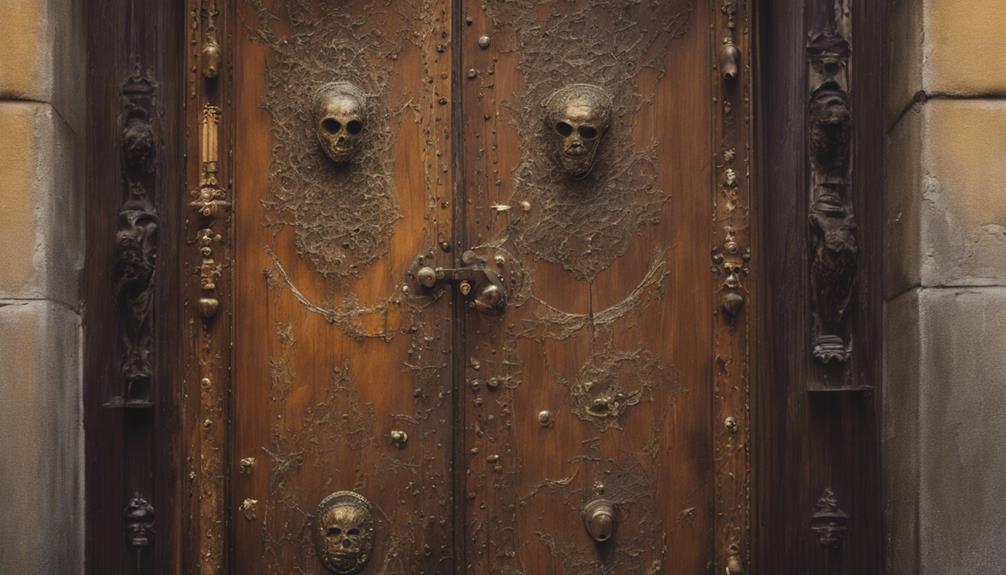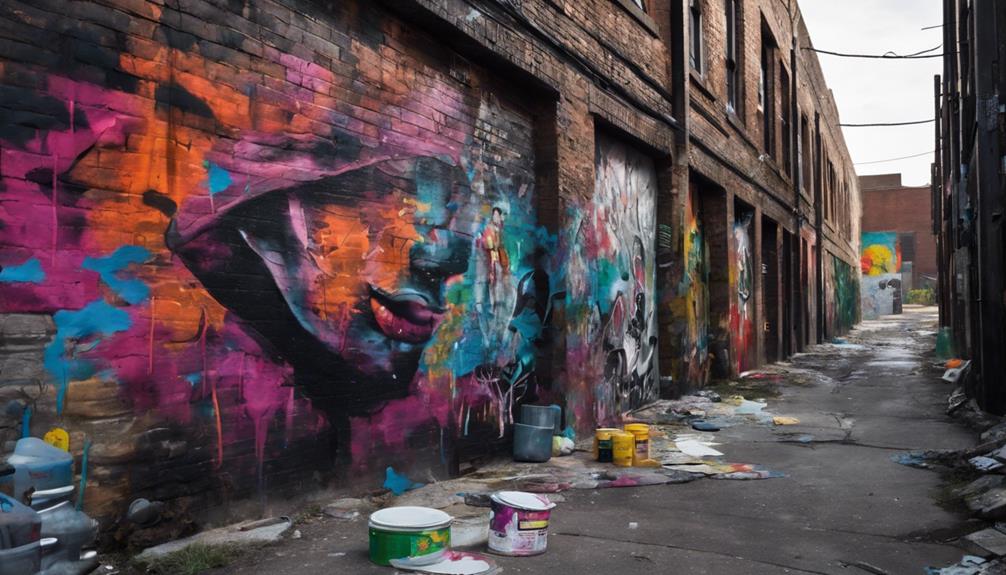
You're about to enter a world where art rebels against the status quo, where creative expression becomes a powerful tool to challenge norms, spark conversations, and inspire change. Subversive art breaks the rules of convention, using disruptive forms to shatter traditional norms and expectations. It's a form of visual dissent, conveying messages that challenge the status quo and spark essential conversations. By blurring the lines between binary norms, subversive art questions societal constructs and invites you to rethink identity. As you journey through this world, you'll discover how art can be a powerful catalyst for transformation – and that's just the beginning.
Breaking the Rules of Convention
When you think of art, you likely imagine creations that conform to traditional standards of beauty and aesthetics, but subversive artists deliberately reject these conventions, opting instead to shake things up with unconventional forms, materials, and messages. They're not interested in creating something that fits neatly into a predetermined box. Instead, they're driven to challenge the status quo, to disrupt the comfortable, and to spark meaningful conversations.
This is where Rebel Aesthetics comes in – a deliberate rejection of traditional norms and expectations. Subversive artists use Disruptive Forms to shatter the illusion of what art "should" be. They experiment with unorthodox materials, pushing the boundaries of what's considered acceptable. They distort, they fragment, they reassemble, and they reimagine. The result is art that's raw, unapologetic, and unbridled.
Art as Social Commentary
Through their unapologetic and often provocative works, subversive artists hold up a mirror to society, forcing you to confront the harsh realities and injustices that often linger just beneath the surface. These artists don't shy away from tackling the tough issues, instead, they dive headfirst into the fray, using their art as a form of cultural critique. By doing so, they spark essential conversations, challenging the status quo and encouraging you to question everything.
As you immerse yourself in their works, you'll notice that subversive artists often employ visual dissent to convey their messages. Through bold, unapologetic, and sometimes unsettling imagery, they disrupt the comfortable narratives that govern our daily lives. By visually representing the contradictions and flaws of our society, they inspire you to think critically about the world around you.
Subversive art isn't just about aesthetics; it's about sparking change. It's about encouraging you to think, to feel, and to act. By holding up a mirror to society, these artists invite you to gaze upon the reflection, to confront the ugly truths, and to demand a better world. As you engage with their works, remember that you're not just a passive observer – you're an active participant in the conversation. You're being called to join the dissent, to question the norms, and to aim for a more just and equitable society. Will you answer the call?
Provoking Thought and Debate
As you explore the domain of subversive art, you'll notice that it doesn't just push boundaries – it actively challenges the status quo. By questioning social norms, these artists force you to confront your own biases and assumptions. What values will you re-examine as you're confronted with art that defiantly asks 'why'?
Challenging the Status Quo
You're often forced to confront uncomfortable realities when subversive art challenges the status quo, provoking thought and debate by questioning the norms and values that govern our lives. This type of art is not afraid to ruffle feathers, sparking necessary conversations about the systems that shape our society. By doing so, subversive art becomes a powerful tool for Cultural Revival, breathing new life into stagnant institutions and reviving forgotten voices.
| Challenging the Status Quo | Examples in Subversive Art |
|---|---|
| Institutional Critique | Questioning the role of museums in shaping art history |
| Cultural Revival | Reviving forgotten cultural practices and traditions |
| Alternative Narratives | Presenting counter-narratives to dominant historical accounts |
| Decentering Power | Challenging dominant voices and amplifying marginalized ones |
| Rethinking Identity | Exploring non-traditional representations of self and community |
Through its unapologetic critique of the status quo, subversive art encourages you to think critically about the world around you, urging you to question everything and seek truth beyond the surface level.
Questioning Social Norms
By challenging the norms that govern our daily lives, subversive art forces you to confront the uncomfortable realities hidden beneath the surface of seemingly ordinary social conventions. It's an unflinching mirror held up to the cultural expectations that shape our behaviors and beliefs. As you gaze into this mirror, you're compelled to question the moral ambiguities that underpin our collective values.
Here are three ways subversive art disrupts the status quo:
- Exposing hypocrisy: By highlighting the contradictions between what we say and what we do, subversive art reveals the cracks in our social facade.
- Subverting cultural norms: By challenging traditional power structures and cultural expectations, subversive art creates space for alternative perspectives and new ways of being.
- Provoking moral dilemmas: By presenting complex, open-ended questions, subversive art invites you to confront your own moral ambiguities and biases.
Through this process, subversive art liberates you from the constraints of conformity, empowering you to think critically and challenge the norms that govern your life. As you navigate the complexities of social norms, you're encouraged to forge your own path, unencumbered by the shackles of cultural expectation.
Challenging Gender and Identity
As you explore the world of subversive art, you'll discover that artists are challenging traditional notions of gender and identity, forcing you to rethink what it means to be male or female, or something entirely different. You'll see how they're using their art to blur the lines between binary norms, creating a space for gender fluidity to thrive. By questioning these norms, artists are unmasking the complexities of identity, inviting you to join the conversation.
Gender Fluidity in Art
Through the lens of gender fluidity, artists challenge traditional notions of identity, inviting viewers to question the societal constructs that have long defined masculinity and femininity. You're encouraged to explore the boundaries of the binary norms that have governed our understanding of gender. In this domain, artists are creating a new visual language that defies categorization.
You'll notice three key themes emerging in gender fluid art:
- Feminist Icons: Artists are reimagining female figures, moving away from traditional representations of femininity. These icons embody strength, power, and a sense of liberation.
- Androgynous Forms: The lines between masculinity and femininity are blurred, giving rise to ambiguous, gender-nonconforming figures. These forms challenge your perceptions, inviting you to reconsider what it means to be male or female.
- Queer Aesthetics: Artists are embracing a fluid, non-binary approach to art, subverting traditional notions of beauty and desire. This new aesthetic is raw, unapologetic, and unbridled.
As you explore the world of gender fluid art, you'll find yourself questioning the very fabric of our gendered society. You'll begin to see that identity is a spectrum, not a fixed point. And that's where the true power of subversive art lies.
Questioning Binary Norms
You're compelled to explore the artificial boundaries that have long divided us into neat, but suffocating, categories as you immerse yourself in the world of subversive art that challenges traditional gender norms. Through cultural deconstruction, artists are dismantling the rigid frameworks that have confined us for so long. By questioning binary norms, they're creating a space for moral ambiguity, where gray areas are celebrated and complexity is embraced.
In this domain, gender is no longer a fixed identity, but a fluid spectrum of expressions and experiences. Artists are redefining what it means to be human, free from the constraints of societal expectations. They're pushing the boundaries of identity, blurring the lines between masculinity and femininity, and creating a world where individuals can exist outside the confines of traditional gender roles.
As you explore deeper into this world, you’ll discover that subversive art is not just about challenging norms, but about creating a new language, one that’s inclusive, diverse, and ever-evolving. It’s an invitation to rethink, to reimagine, and to rebel against the status quo. Are you ready to join the revolution? These revolutionary thinkers reshaping ideas are pushing boundaries, unveiling hidden narratives, and amplifying voices that have long been silenced. Through their work, they challenge perceptions and inspire conversations that transcend conventional limitations. This movement is not just about art—it’s about transforming the way we see the world.
Identity Unmasked
Behind the masks of conformity, artists are unapologetically revealing the complexity of human identity, stripping away the artificial layers of gender and social expectation that have long concealed our true selves. You're invited to join this journey of self-discovery, where creativity becomes the catalyst for liberation.
As you explore the domain of subversive art, you'll encounter three key themes that challenge the status quo:
- Cultural Amnesia: Artists are reviving forgotten narratives, rewriting history, and reclaiming identities that have been erased or marginalized.
- Digital Masks: In the age of social media, artists are using digital platforms to expose the artificiality of online personas, revealing the tensions between our virtual and real selves.
- Unmasked Identities: By embracing their true selves, artists are inspiring others to do the same, sparking a movement that celebrates individuality and rejects societal norms.
Through their work, these artists are dismantling the constructs that have restricted our understanding of identity. You, too, can join the movement, embracing the complexity of your own identity and shattering the masks that have held you back.
The Power of Uncomfortable Truths
Often, subversive art forces you to confront uncomfortable truths about yourself and the world around you, sparking a sense of discomfort that can be both unsettling and transformative. This discomfort is precisely what makes subversive art so powerful. By challenging cultural anesthesia – the numbing effect of societal norms and expectations – subversive art encourages you to question everything you thought you knew. It's not about providing easy answers, but about stirring up moral ambiguity, making you confront the gray areas you'd rather ignore.
Subversive art doesn't shy away from the darker aspects of human nature, and that's what makes it so liberating. It's not afraid to tackle the uncomfortable, the taboo, and the unspoken. By doing so, it creates a space for introspection, self-reflection, and ultimately, personal growth. You're forced to confront your own biases, prejudices, and fears, and that's when the real transformation begins.
Subversive art is not about providing a comfortable, feel-good experience. It's about ripping off the Band-Aid, exposing the wounds, and letting the healing begin. It's about embracing the complexity of human experience and acknowledging that life is messy, complicated, and often contradictory. So, if you're ready to confront the uncomfortable truths, if you're ready to challenge your own beliefs and assumptions, then subversive art is waiting for you. It's time to wake up, to feel the discomfort, and to let the transformation begin.
Artists as Agents of Change
By harnessing the power of creative expression, artists become catalysts for change, inspiring a ripple effect that resonates far beyond the confines of their art. As you begin this journey, you'll discover that artists are not just mere creators, but agents of change who challenge the status quo and spark a Cultural Revolution. With Artistic License, they push boundaries, questioning the norms and sparking conversations that need to be had.
Here are three ways artists become agents of change:
- Challenging Cultural Norms: Through their work, artists critique societal norms, encouraging you to think differently and sparking a Cultural Critique. This, in turn, inspires a wave of Personal Expression, as people start to question and challenge the norms that govern their lives.
- Embracing Creative Freedom: Artists embody the Innovative Spirit, unafraid to take risks and push the boundaries of what's considered acceptable. This Creative Freedom inspires you to do the same, to break free from the shackles of conformity and forge your own path.
- Fostering Human Connection: Through their Artistic Vision, artists create a sense of community, bringing people together and fostering a deeper Human Connection. This connection inspires empathy, understanding, and a sense of belonging, which is essential for creating lasting change.
As you explore the world of subversive art, remember that you, too, have the power to become an agent of change. By embracing your own creative expression, you can inspire a movement, spark a revolution, and bring about lasting change.
Transgressive Art Forms Emerge
As you explore the world of subversive art, you'll discover that transgressive art forms emerge as a reaction against the constraints of traditional art, challenging your perceptions and forcing you to confront the darker aspects of human nature. These boundary-pushing creations reject the status quo, embracing the unconventional and the provocative. You'll encounter Cultural Hybrids, where artists combine disparate styles and mediums to create something entirely new and subversive. This fusion of influences sparks a sense of unease, as familiar norms are disrupted and recontextualized.
Artistic Sabotage is another hallmark of transgressive art, where artists deliberately challenge the dominant narratives and power structures. By subverting expectations and conventions, they create a sense of discomfort, prompting you to question the very fabric of society. This artistic rebellion rejects the notion of art as mere decoration, instead using it as a tool for social commentary and critique. As you explore further into this world, you'll find that transgressive art forms aren't just about shocking or offending – they're about sparking a revolution of thought, encouraging you to see the world from a different perspective. By embracing the uncomfortable and the unknown, you'll find liberation in the freedom to challenge and subvert.
Questioning Authority and Norms
You'll find that subversive artists, in their pursuit of challenging the status quo, relentlessly question authority and norms, probing the very foundations of societal structures and cultural institutions. They understand that blindly following the rules only perpetuates the existing power dynamics, stifling progress and creativity. By questioning authority, subversive artists expose the flaws in the system, encouraging you to think critically about the world around you.
Here are three ways subversive artists challenge authority and norms:
- Rejecting Cultural Homogeny: By celebrating individuality and diversity, subversive artists resist the forces of cultural homogeny, which seeks to erase unique identities and perspectives. They promote a vibrant tapestry of experiences, challenging the dominant narratives that often silence marginalized voices.
- Exposing Institutional Blindness: Subversive artists shed light on the biases and shortcomings of institutions, revealing the ways in which they perpetuate inequality and oppression. By doing so, they create a more informed and empathetic society, one that's better equipped to address its own flaws.
- Redefining Norms and Expectations: Subversive artists redefine what's considered "normal" or "acceptable," pushing boundaries and challenging your assumptions. They inspire you to rethink your values and beliefs, embracing the beauty of uncertainty and the power of self-expression.
Frequently Asked Questions
Can Subversive Art Be Considered a Form of Vandalism?
You're wondering if subversive art is just vandalism in disguise. Let's face it, street tagging can be seen as a form of public disruption. But isn't that the point – to disrupt the status quo? You can't deny that it sparks conversation and challenges norms. So, is it vandalism or a bold statement? You decide.
Is All Provocative Art Inherently Subversive?
As you ponder the provocative art scene, ask yourself: does pushing boundaries always equal subversion? Not necessarily. It's about the artistic intent behind the work. If it's meant to challenge cultural norms, spark critical thinking, and inspire liberation, then yes, it's subversive. But if it's just meant to shock or provoke without a deeper message, it's more about attention-seeking than sparking real change.
Can Subversive Art Be Used to Promote Positive Change?
You're wondering if subversive art can be a catalyst for positive change. Absolutely, it can! Through social commentary and art activism, subversive art can spark a cultural shift, fostering a political awakening that challenges the status quo. By embracing creative disruption and radical imagination, you can harness the power of art to inspire meaningful transformation, paving the way for a more just and equitable world.
Is Subversive Art Only Created by Marginalized Groups?
You might think that subversive art is exclusive to marginalized groups, but that's not entirely true. While it's often born from the frustrations of cultural norms and social hierarchies, anyone can create subversive art. However, artistic privilege and mainstream co-optation can water down the message. It's crucial to amplify community voices and acknowledge the power dynamics at play. By doing so, you can guarantee that subversive art remains a powerful tool for change, rather than a mere commodity.
Can Subversive Art Be Commercially Successful?
You wonder if subversive art can be commercially successful. The answer is, it's possible, but it comes with a marketability dilemma. When you compromise on your artistic vision to appeal to the mainstream, you risk losing creative control. But if you stay true to your message, you might not achieve financial freedom. It's a delicate balance, but if you can find a way to make your art appealing without selling out, you'll be rewarded with both financial success and the freedom to keep creating.