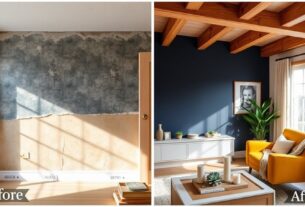
You're about to transform your home office into a space that sparks creativity, fuels motivation, and boosts your overall productivity. To get started, choose calming colors like blue or green for your walls, and opt for a minimalist layout that separates work and storage areas. Position your desk facing the door, but not directly in line, to minimize distractions. Next, prioritize natural light and layered lighting with adjustable bulbs to create an energizing atmosphere. By incorporating these crucial elements, you'll be well on your way to crafting a home office that inspires focus and drives results – and that's just the beginning.
Designing for Focus and Clarity
How do you want to feel when you walk into your home office – overwhelmed or focused? The design of your workspace plays a significant role in determining your productivity and mental clarity. By incorporating principles of color psychology and spatial layout, you can create an environment that encourages focus and clarity.
Color psychology suggests that certain hues can influence your mood and behavior. For instance, blue is known to promote feelings of calmness and trust, whereas green is associated with balance and harmony. Consider painting your walls a soothing blue or green to create a sense of serenity. Conversely, avoid bold and bright colors that can stimulate anxiety and distractions.
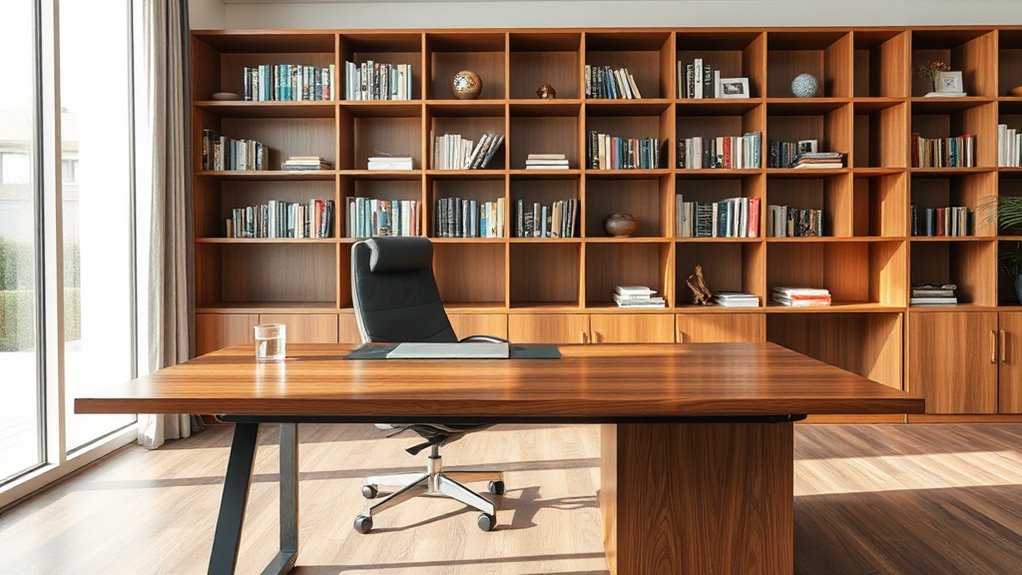
The spatial layout of your office is equally important. A cluttered and cramped space can lead to feelings of overwhelm and anxiety. Instead, opt for a minimalist approach with a clear distinction between work and storage areas. Position your desk in a way that allows you to face the door, but not directly in line with it, to minimize distractions. Furthermore, consider investing in a comfortable and ergonomic chair to promote good posture and reduce eye strain.
Lighting That Boosts Energy
Beyond the carefully chosen colors and spatial layout, another crucial element in your home office design is the type of lighting that illuminates your workspace. Lighting can greatly impact your energy levels, mood, and overall productivity. It is important to get it right.
To create a space that boosts energy, you should prioritize natural light. If possible, position your workspace near a window to capitalize on the benefits of natural light. This will not just reduce eye strain but will also help regulate your circadian rhythms.
However, when natural light isn't an option, you'll need to rely on artificial lighting. Here are some tips to keep in mind:
- Choose light bulbs with a color temperature between 5000-6500K, which mimics natural daylight and promotes alertness.
- Use layered lighting to create a visually appealing and functional space. This can include overhead lighting, task lighting, and ambient lighting.
- Consider using smart light bulbs that can be adjusted to different brightness levels and color temperatures to suit your needs.
- Avoid harsh or dim lighting, as it can lead to eye strain and fatigue.
Ergonomic Essentials for Comfort
With your workspace well-lit, it's time to focus on creating a comfortable environment that supports your physical well-being. You'll spend hours working in your home office, so it's vital to prioritize ergonomics. A well-designed space can boost your productivity, reduce eye strain, and prevent long-term injuries.
To get started, consider the following ergonomic necessities:
| Category | Optimal Setting | Why It Matters |
|---|---|---|
| Chair Selection | Adjustable, lumbar support, breathable fabric | Reduces back strain, promotes good posture |
| Desk Height | 29-30 inches, allowing elbows to rest at 90° | Prevents straining, promotes comfortable typing |
| Keyboard Placement | Directly in front of you, 1-2 inches above your lap | Reduces wrist strain, promotes neutral hand position |
Additionally, make sure your monitor is at a comfortable distance (about arm's length) and positioned directly in front of you to reduce neck strain. Don't forget about foot support – keep your feet flat on the floor or use a footrest to maintain good posture. Finally, prioritize wrist protection by using a wrist rest for your keyboard and mouse.
Minimizing Distractions and Noise
Now that your workspace is ergonomically optimized, it's time to tackle the often-overlooked aspect of minimizing distractions and noise. You've created a comfortable environment, but without a distraction-free zone, your productivity will suffer. It's essential to identify and eliminate potential distractions, ensuring you stay focused on your tasks.
To achieve this, consider the following strategies:
- Invest in soundproofing techniques, such as acoustic panels or white noise machines, to reduce background noise and create a more peaceful environment.
- Implement distraction management by setting boundaries with family and friends, establishing clear work hours, and avoiding multitasking.
- Designate a "quiet zone" in your office, free from electronic devices and other distractions, where you can focus on vital tasks.
- Consider using website blockers or productivity apps to minimize digital distractions and stay on track.
Personalizing Your Productive Space
Your productive space is an extension of your personality, and personalizing it can boost your motivation and focus. By incorporating decorative elements that reflect your style and interests, you'll create an environment that inspires creativity and productivity. Add motivational quotes, images, or artwork that resonate with your goals and values to keep you driven and committed.
Personalizing your space likewise helps you establish a sense of ownership and accountability. When your surroundings reflect your personality, you're more likely to feel invested in your work and motivated to achieve your objectives. Consider displaying personal mementos, awards, or achievements that celebrate your accomplishments and reinforce your confidence.
To take it a step further, incorporate elements that stimulate your senses. Add plants for a touch of nature, use scented candles or crucial oils to create a calming atmosphere, or install a sound system to listen to music that fuels your creativity. By tailoring your space to your unique needs and preferences, you'll create an environment that sparks innovation and promotes productivity. Remember, your productive space should be a reflection of you – so don't be afraid to get creative and make it your own.
Organizing for Maximum Efficiency
Once you've personalized your productive space, it's time to optimize its layout for maximum efficiency. This is where organizing comes into play. A well-organized home office can help you stay focused and motivated, allowing you to tackle tasks with ease.
To get started, take a step back and assess your workspace. Identify areas that are prone to clutter and disorganization. Then, implement decluttering strategies such as the "one touch rule" or the "inbox-outbox system" to maintain a tidy environment.
Here are some additional tips to help you organize for maximum efficiency:
- Designate zones: Divide your workspace into distinct zones, such as a writing zone, a meeting zone, or a storage zone, to guarantee everything has its place.
- Prioritize frequently used items: Keep frequently used items within easy reach to save time and reduce distractions.
- Implement scheduling techniques: Use a planner, calendar, or app to schedule tasks and deadlines, helping you stay on track and avoid procrastination.
- Utilize vertical space: Maximize your workspace by using wall-mounted shelves, hooks, or baskets to store items, keeping your floor and surfaces clear.
Frequently Asked Questions
Can I Convert a Closet Into a Functional Home Office Space?
You can definitely convert a closet into a functional workspace! It's all about space optimization. By cleverly designing the closet's layout, you'll be amazed at how much you can fit in. Consider a wall-mounted desk, shelves, and a compact chair to maximize the area. With a little creativity, your closet design can transform into a productive hub, perfect for focusing on your tasks. Just remember to measure carefully and choose multi-functional furniture to make the most of this tiny but mighty space.
How Often Should I Declutter and Reorganize My Workspace?
You know how easily clutter can creep into your workspace, right? To stay on top of it, set a reminder to declutter and reorganize every 4-6 weeks. This frequency helps maintain a sense of control and focus. Implementing workspace organization tips, like categorizing and prioritizing tasks, and decluttering strategies, such as the "one in, one out" rule, will keep your space feeling fresh and productive. By doing so, you'll avoid feeling overwhelmed and stay motivated to tackle your to-do list!
Are Standing Desks Really Worth the Investment for Productivity?
You're wondering if standing desks are worth the investment for a productivity boost. The answer is yes! Standing desks offer ergonomic benefits that can transform your work style. With options ranging from manual to electric, and even sit-stand convertible types, you'll find a standing desk that fits your needs. By switching to a standing desk, you'll increase energy, reduce eye strain, and stay focused for longer periods. It's a game-changer for your workflow!
Can I Use a Home Office for Both Work and Personal Activities?
You're wondering if you can use your home office for both work and personal activities. Absolutely, you can! The key is to establish clear workspace boundaries. A dual-purpose design allows you to separate your work and personal life during still utilizing the same space. By incorporating clever storage and flexible furniture, you'll be able to switch between work mode and personal time seamlessly. It's all about finding a balance that works for you and your unique needs.
Are There Specific Colors That Can Improve Focus and Productivity?
You're about to reveal a game-changing secret! Did you know that certain colors can turbocharge your focus and productivity? It's all about color psychology! Research reveals that specific hues can alter your mood, energy, and concentration. For instance, blue stimulates calmness and trust, whereas green boosts harmony and balance. By incorporating these colors into your workspace ambiance, you'll be amazed at how they can transform your work sessions. Get ready to unleash your full potential!