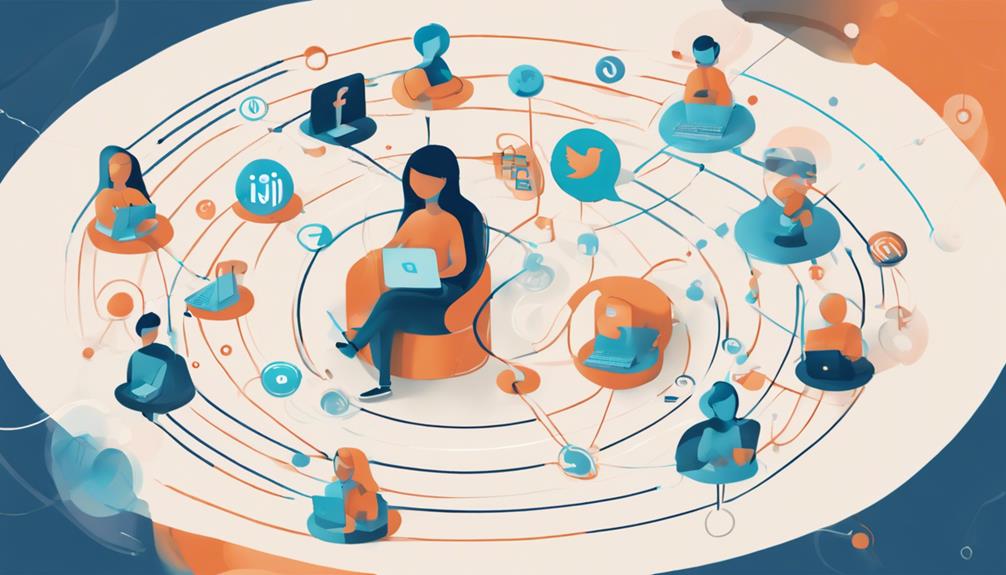
You're about to discover the transformative power of omnichannel marketing, which can boost your online visibility by up to 80%, increase customer retention rates, and even save you up to 20% in operational costs. By providing a seamless customer experience across all channels, you'll build trust, foster loyalty, and drive sales growth. With omnichannel marketing, you'll make data-driven decisions, gain deeper customer insights, and optimize conversions. You'll stay ahead of the competition and capitalize on trends with agility. As you explore the benefits of omnichannel marketing, you'll uncover even more game-changing advantages that can take your business to the next level.
Seamless Customer Experience Matters
As you navigate through various touchpoints, from social media to physical stores, you expect a cohesive and personalized experience that acknowledges your preferences and interactions. You want to feel seen and valued, and a seamless customer experience is key to building emotional connections with a brand.
Omnichannel marketing helps bridge the gap between online and offline interactions, providing a unified experience that acknowledges your every engagement. When done right, personalization benefits abound. You'll receive tailored recommendations, offers, and content that speak directly to your needs and interests. This level of attention fosters a sense of appreciation, making you more likely to engage, purchase, and advocate for the brand.
A cohesive experience also helps to build trust. When you receive consistent messaging and interactions across all touchpoints, you're more likely to trust the brand and feel confident in your purchasing decisions. Emotional connections are formed when a brand demonstrates an understanding of your needs and preferences. This connection leads to loyalty, advocacy, and ultimately, long-term relationships.
Increased Brand Visibility Online
As you implement an omnichannel marketing strategy, you'll notice a significant boost in your brand's online visibility. By maintaining a consistent visual identity across all platforms, you'll create a unified online presence that resonates with your target audience. This, in turn, will expand your brand's online reach, allowing you to connect with a broader customer base.
Consistent Visual Identity
With a consistent visual identity, you can increase your brand's online visibility by up to 80%, making it more recognizable across different platforms. This importance is key to building brand awareness and trust with your target audience. By establishing clear brand standards, you guarantee that your visual elements, such as logos, color schemes, and typography, are used correctly across all touchpoints. This helps to create a cohesive look and feel that resonates with your audience.
A well-planned visual hierarchy is also essential in guiding the viewer's attention to the most important elements of your content. By using size, color, and placement strategically, you can draw attention to your calls-to-action, promotions, or key messaging. This visual flow helps to create a seamless user experience, making it easier for customers to engage with your brand. By maintaining a consistent visual identity, you can strengthen your brand's online presence, increase recognition, and ultimately drive more conversions.
Unified Online Presence
Your brand's unified online presence gives you a significant competitive edge, making it easier for customers to find and recognize you across different platforms. This is because a unified online presence guarantees consistency across all your online channels, from your website to social media and beyond. You're able to present a cohesive brand image, reinforcing your brand portfolio and strengthening your digital ecosystem.
When you present a unified online presence, you make it easier for customers to find and engage with your brand. Your brand's message, visual identity, and tone are consistent across all platforms, eliminating confusion and building trust with your audience. This, in turn, increases brand recognition and loyalty. A unified online presence also helps you to better manage your online reputation, as you're able to respond promptly to customer feedback and maintain a consistent tone across all channels. By presenting a unified online presence, you're able to build a strong digital foundation that supports your omnichannel marketing strategy.
Broader Reach Online
Expand your online footprint and tap into new audiences by establishing a robust omnichannel presence that enhances your brand's visibility across multiple platforms. As you broaden your online presence, you'll transcend traditional digital boundaries, reaching a global audience and expanding your virtual footprint. This web expansion enables you to connect with customers wherever they are, whenever they want. Your cyber reach will stretch across the digital horizon, allowing you to access previously inaccessible markets. By casting a wider net, you'll increase your internet presence, making it easier for customers to find and engage with your brand. This, in turn, boosts brand awareness, driving conversions and revenue. With an omnichannel approach, you'll no longer be limited by geographical or platform-specific constraints, freeing you to explore new opportunities and grow your customer base. As you push the boundaries of your online presence, you'll discover new avenues for growth, solidifying your brand's position in the digital landscape.
Consistency Across Channels
As you implement an omnichannel marketing strategy, you'll want to guarantee consistency across all channels. This means projecting a unified brand voice that resonates with your target audience, regardless of how they interact with your brand. By achieving this consistency, you'll create a seamless user experience that fosters trust and loyalty with your customers.
Unified Brand Voice
By maintaining a unified brand voice across all channels, you establish consistency in your message, visual identity, and tone, which is essential for building trust and recognition among your target audience. This consistency is key to maintaining brand integrity, ensuring that your audience receives a cohesive message regardless of the platform they interact with your brand on.
Imagine walking into a store and being greeted by a sales associate who sounds and looks just like the one you interacted with online. That's the kind of consistency you can achieve with a unified brand voice. Here are a few ways it can benefit your brand:
- A consistent tone that resonates with your target audience
- Visual elements that evoke the same emotions across all channels
- Messaging that reinforces your brand's values and mission
- A cohesive brand image that builds recognition and trust
- A smooth shift between online and offline interactions
Seamless User Experience
When you interact with a brand, you expect a consistent experience across all touchpoints, from social media to in-store visits, and a seamless user experience is precisely what omnichannel marketing provides. You want to easily find what you're looking for, and omnichannel marketing makes it possible. With personalized navigation, you're guided through the brand's offerings, and intuitive interfaces make sure that you can effortlessly move between channels. Whether you're browsing on your phone, laptop, or in-store, the experience is seamless, and you can pick up where you left off. Omnichannel marketing guarantees that the brand's message, visual identity, and tone are consistent across all channels, creating a cohesive and engaging experience. This consistency builds trust and loyalty, as you feel comfortable and familiar with the brand. By providing a seamless user experience, brands can increase engagement, conversion rates, and customer satisfaction. With omnichannel marketing, you can enjoy a hassle-free, unified experience that meets your evolving needs and expectations.
Channel Agnostic Approach
You expect the same brand voice, visual identity, and messaging across all channels, and that's exactly what a channel agnostic approach delivers. This approach guarantees that your brand's message, visual identity, and tone are consistent across all touchpoints, creating a cohesive and recognizable brand image. With a channel agnostic approach, you can achieve cross-channel harmony, where all channels work together seamlessly to provide a unified customer experience.
Here's what this approach can look like in practice:
- You see a social media ad that mirrors the messaging on the company website.
- You receive an email that uses the same visual identity as the mobile app.
- You walk into a physical store that mirrors the online brand experience.
- You get a text message that uses the same tone as the customer service chat.
- You watch a TV commercial that echoes the language used in online ads.
This consistency breeds trust and familiarity, making it easier for customers to engage with your brand across different platforms. With platform flexibility, you can adapt to changing customer behaviors and preferences, ensuring that your brand remains relevant and accessible.
Better Data Driven Decision Making
With access to a unified customer view, you'll tap into a goldmine of insights that empower better data-driven decision making. This centralized hub of customer information allows you to analyze behaviors, preferences, and habits, empowering you to make informed decisions that drive business growth. By leveraging predictive analytics, you can identify patterns and trends that inform strategic planning, ensuring your marketing efforts are targeted and effective.
Customer profiling is another key benefit of omnichannel marketing. By creating detailed profiles of your customers, you can segment your audience, tailor your messaging, and deliver personalized experiences that resonate with each individual. This granular understanding of your customers enables you to anticipate their needs, preferences, and pain points, allowing you to develop targeted campaigns that drive engagement and conversion.
With better data-driven decision making, you can optimize your marketing strategies in real-time, responding to shifting customer behaviors and preferences. This agility enables you to stay ahead of the competition, capitalizing on emerging trends and opportunities. By harnessing the power of data, you can refine your marketing strategies, maximize ROI, and drive business success. By embracing an omnichannel approach, you'll tap into the full potential of data-driven decision making, poised to revolutionize your marketing efforts and propel your business forward.
Enhanced Customer Insights Generation
Omnichannel marketing empowers you to unearth a deeper understanding of your customers by generating enhanced customer insights that fuel targeted marketing strategies. By combining online and offline data, you can create thorough customer profiles that reveal their preferences, behaviors, and pain points. This unified view enables you to develop personalized experiences that resonate with your audience.
Here are some ways omnichannel marketing enhances customer insights:
- Holistic customer profiling: You can merge online and offline data to create detailed profiles that capture your customers' interactions, preferences, and behaviors.
- Data enrichment: You can enrich your customer data by appending external data sources, such as social media, weather, or location data, to gain a more nuanced understanding of your audience.
- Cross-channel analysis: You can analyze customer interactions across multiple touchpoints, including websites, social media, email, and in-store interactions, to identify patterns and trends.
- Real-time feedback: You can collect real-time feedback from customers through various channels, enabling you to respond promptly to their concerns and preferences.
- Predictive analytics: You can use machine learning algorithms to analyze customer data and predict their future behaviors, allowing you to develop targeted marketing strategies.
Improved Conversion Rate Optimization
By integrating online and offline channels, businesses can identify and eliminate conversion-killing pain points, boosting their conversion rates by up to 25%. This is because omnichannel marketing allows you to map your customer's journey, identifying where they're dropping off and why. With this information, you can pinpoint areas that need improvement and optimize your funnel for maximum conversions.
One of the most effective ways to do this is through funnel analysis. By analyzing your sales funnel, you can identify where customers are leaking out and plug those holes. This could mean simplifying your checkout process, reducing friction in your forms, or rewriting your CTAs to be more compelling. By making these tweaks, you can significantly enhance your conversion rates and revenue.
Additionally, implementing conversion hacks can give your business an extra edge. These hacks can be as simple as adding social proof to your website, using urgency tactics to create a sense of scarcity, or leveraging customer testimonials to build trust. By incorporating these tactics into your marketing strategy, you can increase conversions and drive more sales.
The key is to continually test and refine your approach, using data to inform your decisions and optimize your marketing strategy. By doing so, you'll be well on your way to maximizing your conversions and reaping the benefits of omnichannel marketing.
Competitive Advantage in Market
How can you differentiate your brand in a crowded market where customers are constantly bombarded with competing messages? To stand out, you need to develop a competitive advantage that sets you apart from the rest. This is where omnichannel marketing comes in – by providing a seamless customer experience across all touchpoints, you can create a unique market positioning that resonates with your target audience.
Here are some ways omnichannel marketing can help you gain a competitive edge:
- Market segmentation: Identify and cater to specific customer groups, increasing the relevance and effectiveness of your marketing efforts.
- Competitive intelligence: Stay ahead of the competition by analyzing their strengths and weaknesses, and adjusting your strategy accordingly.
- Brand differentiation: Develop a unique value proposition that sets you apart from competitors and resonates with your target audience.
- Industry disruption: Identify opportunities to disrupt traditional industry norms and create new opportunities for growth.
- Market analysis: Continuously monitor market trends and adjust your strategy to stay ahead of the curve.
Higher Customer Retention Rates
You can greatly enhance customer loyalty and reduce churn rates by ensuring a cohesive brand experience across all touchpoints. When you provide a seamless experience, customers are more likely to return and recommend your brand to others. This, in turn, boosts customer loyalty and reduces the likelihood of them switching to a competitor.
By implementing effective retention strategies, you can increase customer retention rates significantly. For instance, sending personalized messages and offers based on individual customer behavior can make them feel valued and appreciated. Additionally, offering loyalty programs, exclusive deals, and premium services can also encourage customers to stick with your brand.
Omnichannel marketing helps you create a unified customer profile, allowing you to understand their preferences, behaviors, and needs better. This understanding enables you to develop targeted retention strategies that cater to their unique requirements. As a result, you can build strong, long-term relationships with your customers, driving customer loyalty and retention.
In today's competitive market, customer retention is vital for business success. By prioritizing customer loyalty and implementing effective retention strategies, you can reduce churn rates, increase customer lifetime value, and ultimately, drive business growth.
Cost Savings Through Efficiency
Implementing an omnichannel marketing strategy can help your business streamline operations, reducing redundant efforts and saving up to 20% in operational costs. By integrating all your marketing channels, you can eliminate the duplication of tasks and focus on more value-added activities.
Here are some ways omnichannel marketing can lead to cost savings:
- Streamlined Operations: With a single, unified platform, you can manage all your marketing efforts from one place, reducing the need for multiple tools and systems.
- Automated Workflows: Automate repetitive tasks, such as data entry and campaign deployment, to free up more time for strategy and creativity.
- Process Optimizations: Identify and eliminate inefficient processes, ensuring that every dollar spent on marketing generates maximum ROI.
- Centralized Management: Get a single, unified view of your marketing performance, making it easier to make data-driven decisions and optimize your strategy.
- Reduced Overheads: By reducing the need for multiple systems and tools, you can considerably lower your overhead costs and allocate more resources to high-impact initiatives.
Improved Sales and Revenue Growth
By integrating your marketing channels, you can create a seamless customer experience that drives sales and revenue growth, as consistent messaging and personalized interactions foster brand loyalty and encourage repeat business. With an omnichannel approach, you can craft targeted promotions that resonate with your audience, increasing the likelihood of conversion and ultimately, revenue growth. By leveraging the hidden psychology of marketing, you can tap into consumer emotions and behavioral triggers that influence purchasing decisions, making your campaigns more persuasive and impactful. Understanding these psychological factors allows you to craft messaging that resonates deeply with your audience, fostering trust and long-term engagement. This strategic approach not only enhances brand perception but also maximizes customer lifetime value, driving sustained revenue growth.
By leveraging sales analytics, you can identify lucrative revenue streams and optimize your growth strategies to maximize profit margins. This data-driven approach enables you to refine your marketing efforts, ensuring that every campaign and promotion is aligned with your business objectives.
Moreover, an omnichannel strategy helps you build strong customer loyalty, which is essential for long-term revenue growth. When customers have a positive, cohesive experience across all touchpoints, they're more likely to return and advocate for your brand. This loyalty translates to increased sales, positive reviews, and ultimately, a competitive edge in the market.
Better Crisis Management Capabilities
When you implement an omnichannel marketing strategy, you'll be better equipped to handle crises as they arise. With a unified communication strategy in place, you'll be able to respond quickly and consistently across all channels. This enables you to proactively resolve issues, monitor crises in real-time, and maintain transparency throughout the process.
Unified Communication Strategy
With a unified communication strategy in place, you can respond swiftly and effectively in times of crisis, guaranteeing that your brand's message remains consistent across all channels. This cohesive approach allows you to maintain marketing alignment, making sure that all teams are on the same page, and brand governance is upheld. In times of crisis, every minute counts, and a unified strategy enables you to:
- Respond promptly to customer inquiries and concerns
- Provide consistent messaging across all channels, including social media, customer service, and PR
- Ensure that all teams are aware of the crisis and are working together to resolve the issue
- Monitor and adjust your response in real-time, making adjustments as needed
- Demonstrate transparency and accountability, maintaining trust with your customers and stakeholders
Proactive Issue Resolution Plans
Having a proactive issue resolution plan in place allows you to transform crisis management from a reactive scramble to a swift, systematic response that minimizes damage and maintains customer trust. By anticipating potential risks and developing contingency plans, you can guarantee a prompt and effective response to crises. This proactive approach involves conducting a thorough risk assessment to identify potential vulnerabilities and developing crisis protocols to address them. With a clear plan in place, you can quickly respond to crises, contain the damage, and restore normal operations. This not only helps to mitigate reputational damage but also fosters trust and loyalty among your customers. By being prepared, you can turn a potential crisis into an opportunity to showcase your brand's resilience and commitment to customer satisfaction. By integrating a proactive issue resolution plan into your omnichannel marketing strategy, you can ensure seamless communication and a unified response across all channels, further reinforcing your brand's credibility and reliability.
Real-time Crisis Monitoring Tools
By leveraging real-time crisis monitoring tools, you can rapidly identify potential crises and respond promptly to mitigate their impact. These tools provide you with the ability to stay ahead of the curve, detecting early warning signs of a crisis before it escalates. This enables you to take proactive measures to contain and resolve the issue quickly, minimizing damage to your brand reputation.
Here are some key benefits of real-time crisis monitoring tools:
- Social Listening: Monitor social media conversations in real-time to detect potential crises and respond promptly.
- Crisis Forecasting: Identify early warning signs of a crisis and predict its likelihood, allowing you to prepare and respond accordingly.
- Real-time Alerts: Receive instant notifications of potential crises, enabling you to respond quickly and effectively.
- Sentiment Analysis: Analyze customer sentiment in real-time, helping you to identify areas of concern and respond appropriately.
- Data Visualization: Visualize crisis data in real-time, providing a clear understanding of the situation and enabling data-driven decision-making.
Data Unification and Insights
You gain a deeper understanding of your customers when you unify data from various touchpoints, online and offline, into a single, cohesive view. This unified view helps you break down data silos and generate valuable insights about your customers' behaviors, preferences, and pain points. By consolidating data from different sources, you can create thorough customer profiles that reveal their needs and desires.
Data lakes and unified views enable you to store and analyze large amounts of data from various channels, providing a single source of truth. This, in turn, improves data quality, reducing errors and inconsistencies. With high-quality data, you can activate insights that drive informed business decisions. Data pipelines streamline the data collection process, ensuring that data is fresh and up-to-date.
Moreover, unified data insights empower you to create personalized experiences that resonate with your customers. By understanding their needs and preferences, you can tailor your marketing strategies to effectively engage with them. Data unification and insight generation are vital components of an effective omnichannel marketing strategy. By leveraging these capabilities, you can drive meaningful customer interactions, increase loyalty, and ultimately, boost revenue.
Frequently Asked Questions
How Do I Prioritize Channels for My Omnichannel Marketing Strategy?
When prioritizing channels for your marketing strategy, you need to start by conducting a thorough channel analysis. This involves identifying which channels your target audience is most active on. To do this, create customer profiles to understand their preferences and behaviors. By doing so, you'll be able to pinpoint the channels that'll yield the highest return on investment. You'll then be able to allocate your resources effectively, ensuring your message reaches your audience where they're most receptive.
Can I Use Existing Marketing Tools for an Omnichannel Approach?
'Fasten your seatbelts, folks! You're about to begin an omnichannel adventure. Can you repurpose existing marketing tools for an omnichannel approach? Absolutely! You'll need to integrate them seamlessly, ensuring channel alignment and avoiding data silos. Assess your tech stack, identifying which tools can be leveraged or upgraded to support your omnichannel strategy. By doing so, you'll create a cohesive, customer-centric experience that drives real results.'
How Long Does It Take to See Results From an Omnichannel Campaign?
When launching an omnichannel campaign, you're probably wondering how long it'll take to see results. The answer depends on your campaign timeline and data analysis. If you've set up a solid strategy, you might start seeing engagement and conversions within a few weeks. But to get a clear picture of success, wait at least 3-6 months. This allows you to collect meaningful data and make adjustments. By then, you'll have a better understanding of what's working and what needs tweaking.
Do I Need a Large Team to Implement Omnichannel Marketing?
You're not alone in thinking you need an army of marketers to implement omnichannel marketing. But, surprisingly, that's not the case. Think of your team as a well-oiled machine, where each part plays an essential role. You can achieve omnichannel success with a lean team, as long as you have the right team structure and resource allocation in place. Focus on assigning tasks that play to each team member's strengths, and you'll be orchestrating a harmonious marketing symphony in no time.
Can Omnichannel Marketing Work for B2B Businesses as Well?
You might think omnichannel marketing is only for B2C businesses, but it can be just as effective for B2B companies. In fact, you can leverage omnichannel marketing to navigate B2B complexities and industry nuances. By doing so, you'll be able to tailor your approach to your specific industry and customer needs, ultimately driving more targeted and effective engagement.