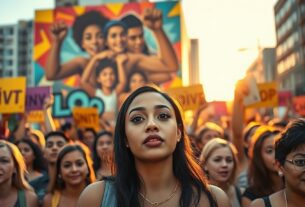
You’re stepping into a legacy of fearless individuals who have relentlessly challenged the status quo, dismantling barriers to equality that have stifled human potential for centuries. You’re about to discover the trailblazers who have fought for equality, the systemic barriers that still exist, and the importance of grassroots activism. You’ll learn how social norms can be changed and how collective action is pivotal to driving progress. As you move forward, you’ll uncover the complex web of inequality and the ways in which you, too, can become a force for change, sparking a ripple effect that echoes far beyond your community. By challenging the status quo, you join a movement of those who refuse to accept injustice as an unchangeable reality. Through education, advocacy, and direct action, you have the power to amplify unheard voices and dismantle entrenched systems of oppression. Your journey toward social change begins with awareness but thrives through bold, persistent efforts to create a more just and equitable world.
Pioneers of the Equality Movement
Throughout history, trailblazing individuals have championed the cause of equality, paving the way for the modern movements we see today. You're likely familiar with some of these pioneers, but there are many Hidden Figures who've made significant contributions to the fight for equality. These individuals, often overlooked or underappreciated, have played a pivotal role in shaping the course of history.
You might be surprised to learn that Unlikely Allies have often emerged in the most unexpected places. For instance, during the Civil Rights Movement, some southern white women defied societal norms to support the fight for racial equality. These women, often from privileged backgrounds, used their privilege to amplify the voices of marginalized communities. Their bravery and solidarity helped to galvanize a movement that continues to inspire today.
As you reflect on the pioneers of the equality movement, remember that their work wasn't limited to grand, showy acts. Many Hidden Figures worked behind the scenes, laying the groundwork for future generations. Their tireless efforts, though often unseen, were instrumental in paving the way for the progress we've made so far. As you continue on your own journey towards liberation, draw inspiration from these courageous individuals. Their legacies serve as a powerful reminder that even the smallest actions can have a profound impact on the fight for equality.
Systemic Barriers to Opportunity
As you navigate the complex landscape of social change, you'll frequently encounter systemic barriers to opportunity, which can silently yet effectively hinder marginalized communities from achieving their full potential. These barriers are often deeply ingrained in our institutions and social structures, making them difficult to detect and dismantle.
Socioeconomic disparities, for instance, can limit access to quality education, healthcare, and job opportunities, perpetuating cycles of poverty and disadvantage. Institutional biases, on the other hand, can manifest in discriminatory policies, practices, and attitudes that favor dominant groups over marginalized ones. These biases can be overt, such as discrimination based on race, gender, or sexual orientation, or covert, like unconscious biases that influence decision-making processes.
You might wonder, how can we overcome these barriers? The first step is to acknowledge their existence and the ways in which they intersect to marginalize specific groups. By recognizing these barriers, you can begin to challenge and dismantle them, creating a more level playing field for all. It's essential to engage in honest conversations, listen to marginalized voices, and advocate for policies that promote equity and inclusion. By doing so, you'll be part of the movement that's breaking down systemic barriers to opportunity, paving the way for a more just and equitable society.
The Power of Grassroots Activism
By acknowledging and confronting systemic barriers to opportunity, you're positioned to harness the power of grassroots activism, which has historically been a driving force behind social change movements. Through grassroots efforts, you can mobilize your community, amplify marginalized voices, and create a ripple effect of change. Community organizing is pivotal to this process, as it allows you to connect with like-minded individuals, build coalitions, and develop a unified vision for change.
Local empowerment is also essential, as it enables you to address issues specific to your community and create solutions that are tailored to your unique needs. By focusing on local empowerment, you can build a strong foundation for long-term change, rather than relying on external saviors or quick fixes. Through grassroots activism, you can reclaim your agency, challenge oppressive systems, and create a more just and equitable society.
As you start on this journey, remember that grassroots activism is not a one-time event, but a continuous process of education, mobilization, and collective action. It requires patience, persistence, and a willingness to listen, learn, and adapt. But the rewards are well worth it – grassroots activism has the power to transform lives, communities, and entire societies. So, take the first step today, and join the ranks of those who are fighting for a more just and liberated world.
Breaking Down Social Norms
You're likely familiar with social norms that have been ingrained in our culture for centuries, but it's time to challenge and dismantle the ones that perpetuate inequality and discrimination. Gender roles, for instance, have long been a constraint on human potential, limiting individuals to narrow expectations based on their biological sex. You've probably encountered these stereotypes: men are strong, assertive, and rational, while women are nurturing, emotional, and submissive. But what about those who don't fit these boxes? What about those who defy these expectations and challenge the status quo?
Cultural expectations also play a significant role in shaping our understanding of what's acceptable and what's not. You may have grown up with phrases like "boys don't cry" or "girls are too emotional." These phrases might seem harmless, but they perpetuate harmful gender stereotypes and limit our capacity for emotional expression. It's time to break free from these constraints and create a society where individuals can thrive without being bound by arbitrary norms.
It's essential to recognize that social norms are not set in stone; they can be changed, and it's up to you to be an agent of that change. By questioning and challenging these norms, you're not only liberating yourself but also paving the way for a more inclusive and equitable society. So, take a step back, reflect on the norms that govern your life, and ask yourself: what would happen if I broke free from these expectations?
A Call to Collective Action
Now that you've started questioning and challenging social norms, it's time to take the next step: mobilizing a collective effort to create lasting change. You've recognized the need for equality and justice, and now it's time to turn that awareness into action. The fight for equality isn't a solo mission; it requires a collective push from individuals committed to creating a more just society.
Community engagement is key to sparking meaningful change. It's essential to connect with like-minded individuals, organizations, and community groups working towards a common goal. By doing so, you'll amplify your voice, share resources, and learn from one another's experiences. This collective energy can help you tackle systemic issues, advocate for policy changes, and support marginalized communities.
However, collective action also requires personal accountability. You must hold yourself accountable for your actions, biases, and privileges. Acknowledge your mistakes, listen to marginalized voices, and be willing to learn and grow. Personal accountability ensures that your actions align with your values, and you're not perpetuating the same systems of oppression you're fighting against.
As you commence on this collective journey, remember that equality isn't a destination; it's an ongoing process. It's a continuous effort to dismantle oppressive systems, challenge societal norms, and uplift marginalized voices. By combining community engagement with personal accountability, you'll become a powerful force for change, driving progress towards a more just and equal society.
Frequently Asked Questions
What Are the Most Effective Ways to Hold People in Power Accountable?
When it comes to holding people in power accountable, you'll need to demand transparency and independent oversight. You deserve to know how decisions are made and who's making them. Push for transparency laws that compel those in power to disclose their actions and motivations. Independent oversight bodies can also guarantee accountability, keeping leaders in check. You have the power to create change – use it to demand accountability from those who should be serving you!
How Can We Address Internalized Oppression Within Marginalized Groups?
You've seen it happen – a marginalized group member perpetuates harmful stereotypes about their own community. Internalized oppression is a real barrier to liberation. To tackle it, you must start with self-reflection, acknowledging the ways you've internalized oppressive beliefs. Then, empower yourself with strategies like community building, critical media literacy, and self-care. For instance, the Black Lives Matter movement's focus on black self-love and empowerment is a powerful example of combating internalized racism. By doing so, you'll be one step closer to breaking free from the shackles of oppression.
Can Artificial Intelligence Exacerbate Existing Social Inequalities?
You're wondering if artificial intelligence can worsen social inequalities. Sadly, yes, it can. Bias algorithms, often created by privileged groups, perpetuate existing prejudices. Data disparities and digital divides further amplify these biases. Social scoring systems, meant to streamline decisions, can unfairly penalize marginalized groups. And unequal access to technology means not everyone has a seat at the table. It's essential to recognize these pitfalls and actively work to dismantle them, ensuring AI serves everyone, not just the privileged few.
What Role Do Allies Play in the Fight for Marginalized Communities?
You're the bridge that connects the marginalized to the mainstream, a beacon of hope in the darkest of times. As an ally, you play a pivotal role in creating safe spaces where marginalized voices can thrive. By actively listening to their struggles, you amplify their voices, validating their emotions and experiences. Your support is the wind that fuels their fire, propelling them towards a future where equality isn't a distant dream, but a tangible reality.
How Do We Measure the Success of Social and Political Movements?
You're wondering how to measure the success of social and political movements. It's essential to define what success looks like for you. Track movement metrics like policy changes, community engagement, and resource allocation. Conduct regular impact assessments to evaluate progress and identify areas for improvement. By setting clear goals and monitoring progress, you'll be able to celebrate wins and adjust strategies to create lasting change.