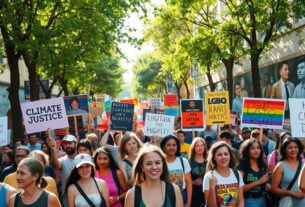
You're witnessing a seismic shift in cultural norms, where long-held traditions are being rewritten, and the boundaries that once defined identity, community, and social justice are dissolving. Traditional notions of identity and belonging are giving way to a more nuanced understanding of personal autonomy. Intersectional activism is amplifying marginalized voices and challenging systems of oppression. Meanwhile, cultural diversity is becoming a invigorating fusion of traditions, and family dynamics are redefining what it means to be a family. As you explore these cultural shifts, you'll uncover more about the individuals, movements, and ideas reshaping our world – and the transformations that are yet to come.
Redefining Identity and Belonging
As you navigate the complexities of modern society, you're likely to find that traditional notions of identity and belonging are being rewritten to accommodate a more diverse and fluid understanding of self. The rigid boundaries that once defined our sense of self are giving way to a more nuanced and dynamic understanding of personal autonomy. You're no longer confined to a single label or category, and you're free to explore and express yourself in ways that feel authentic to you.
This shift is fueled by cultural fusion, where diverse influences and experiences come together to create something entirely new. You're no longer bound by the expectations of a single culture or community, and you're free to forge your own path. This fusion of cultures, identities, and experiences is giving rise to a new wave of creatives, thinkers, and change-makers who refuse to be defined by traditional norms.
As you embrace this new era of personal autonomy, you're empowering yourself to take control of your own narrative. You're no longer limited by the expectations of others, and you're free to create a sense of belonging that's uniquely your own. This is liberation in its truest form – the freedom to be yourself, without apology or pretence. So, take a deep breath, let go of the old, and embrace the uncertainty of this new wave. The possibilities are endless, and the world is waiting for you to express your true self.
The Rise of Intersectional Activism
You're witnessing a seismic shift in the way social justice movements operate, with intersectional activism emerging as a pivotal force that's fundamentally changing the game. This new wave of activism recognizes that social justice isn't just about one issue, but about the interconnectedness of race, gender, class, sexuality, and ability. You're seeing a surge in activists who refuse to silo their identities, instead choosing to amplify marginalized voices and challenge systems of oppression.
Social media has played an essential role in amplifying intersectional activism, providing a platform for marginalized voices to be heard and mobilizing movements like #BlackLivesMatter and #MeToo. However, this increased visibility has also led to activist burnout, as individuals take on the emotional labor of educating and advocating for their communities. It's vital that we prioritize self-care and community support to avoid burnout and safeguard the long-term sustainability of our movements.
As you navigate this new landscape, remember that intersectional activism isn't just about adding more issues to the agenda; it's about fundamentally transforming the way we approach social justice. It's about recognizing that our liberation is inextricably linked, and that we must work together to dismantle systems of oppression. By embracing intersectionality, you're not only challenging the status quo, but also building a more just and equitable world for all.
Challenging Traditional Gender Roles
One in every two people has experienced gender stereotyping, and it's time to challenge these outdated norms. You're likely one of them, tired of being forced into rigid gender roles that stifle your identity and creativity. It's time to break free from these constraints and embrace a more inclusive, gender-neutral world.
Traditional gender roles have long dictated what's acceptable for men and women, stifling individuality and creativity. But you're part of a new wave of changemakers who refuse to conform. You're redefining what it means to be a man or a woman, rejecting the limitations imposed by society.
Feminine leadership is on the rise, and it's about time. Women are no longer held back by patriarchal norms, and their unique perspectives are revolutionizing industries and communities. You're witnessing a shift towards empathy, collaboration, and nurturing – traits often associated with femininity.
As you challenge traditional gender roles, you're paving the way for a more inclusive, gender-neutral society. You're creating spaces where everyone can thrive, regardless of gender identity or expression. It's time to embrace a world where individuals are valued for who they are, not what gender they're expected to be. You're part of a movement that's rewriting the rules, and it's exhilarating.
Cultural Homogenization Vs Diversity
Embracing cultural diversity is essential in today's globalized world, where the threat of cultural homogenization looms large, and it's up to you to preserve the rich tapestry of traditions and customs that make our world so unique. In this global village, cultural exchange and heritage tourism have become increasingly popular, allowing you to experience and appreciate diverse cultures. However, this exchange can also lead to cultural appropriation, where dominant cultures exploit and profit from marginalized cultures without giving due credit or compensation.
As a responsible global citizen, it's important to recognize and respect the cultural heritage of others. You can do this by engaging in ethnic fusion, where different cultures blend together to create something new and innovative, rather than appropriating and exploiting. By doing so, you'll be contributing to a cultural revival, where diverse traditions and customs are celebrated and preserved.
Migrant stories are a confirmation to the power of cultural diversity, as they bring with them new perspectives and experiences that enrich our communities. By embracing these stories, you'll gain a deeper understanding of national identity and the importance of preserving cultural heritage. Remember, cultural diversity is what makes our world rich and unique, and it's up to you to preserve and celebrate it.
The Evolution of Family Dynamics
As you look around, you'll notice that family dynamics are changing rapidly. You're likely to know someone who's part of a non-traditional family structure, or maybe you're part of one yourself. From modern family structures to changing parental roles and single-parent households, the evolution of family dynamics is an area where traditional norms are being rewritten.
Modern Family Structures
You're likely familiar with the traditional nuclear family structure, but modern family dynamics have undergone significant changes, redefining what it means to be a family today. The concept of family planning has evolved, and nuclear units are no longer the only norm. Today, you're just as likely to find blended families, single-parent households, and LGBTQ+ families, all redefining the traditional notion of family.
Some key shifts in modern family structures include:
- Increase in single-parent households, with many single parents choosing to start families on their own
- Rise of blended families, where partners bring children from previous relationships into a new family unit
- Growing acceptance of LGBTQ+ families, with many same-sex couples choosing to start families through adoption or surrogacy
- More people choosing to delay or opt out of family planning, prioritizing personal goals and careers
- Growing trend of multigenerational households, where grandparents, parents, and children live together under one roof
These changes are liberating, allowing individuals to create families that work for them, rather than conforming to traditional norms. As a result, the concept of family is becoming more inclusive, diverse, and empowering.
Changing Parental Roles
Within modern family structures, traditional parental roles are giving way to more fluid and dynamic relationships, where caregiving responsibilities are being redistributed and redefined. You're no longer bound by outdated gender stereotypes, and this shift is empowering you to redefine what it means to be a parent. Co-parenting strategies are becoming more common, allowing both partners to share equal responsibilities and make joint decisions about their child's upbringing.
| Traditional Roles | Modern Roles | Benefits |
|---|---|---|
| Father as Breadwinner | Shared Financial Responsibilities | Reduced financial stress |
| Mother as Primary Caregiver | Shared Childcare Responsibilities | Increased fatherly involvement |
| Gender-Specific Chores | Shared Household Responsibilities | More free time for personal pursuits |
| Limited Paternity Leave | Extended Paternity Leave | Stronger father-child bonds |
| Limited Male Emotional Expression | Emotional Expression Encouraged | Healthier emotional well-being |
As you embrace this new wave of cultural shifts, you're opening yourself up to a more balanced and fulfilling life. By adopting co-parenting strategies and encouraging fatherly involvement, you're not only redefining traditional parental roles but also creating a more liberated and equal society.
Single-Parent Households
Freedom from traditional family structures has led to a significant rise in single-parent households, where one person takes on the responsibility of nurturing, providing, and guiding the next generation. As you navigate this new landscape, you're not alone. Single-parent households are becoming the new norm, and it's essential to acknowledge the challenges that come with it.
Here are some of the realities you might face:
- Custody conflicts: Managing co-parenting agreements, court battles, and the emotional toll of shared custody can be overwhelming.
- Financial struggles: Raising a family on a single income can be a significant challenge, from affording basic necessities to planning for the future.
- Emotional labor: As the sole caregiver, you'll take on the emotional weight of your child's well-being, which can be exhausting.
- Social stigma: You may encounter judgment or criticism from those who don't understand the complexities of single parenthood.
- Resilience: Despite the challenges, single parents develop incredible strength, adaptability, and resourcefulness, which can be a powerful model for their children.
New Narratives of Social Justice
As social justice movements continue to evolve, they're reframing traditional narratives to emphasize intersectionality and inclusivity. You're no longer bound by the constraints of a single, dominant voice. Instead, you're part of a chorus of marginalized communities demanding to be heard. These new narratives prioritize moral affirmations, recognizing that social justice can't be achieved without acknowledging the interconnectedness of struggles. You're not alone in this fight; collective empathy is the fuel that drives progress.
You're witnessing a seismic shift in the way stories are told. The hegemonic grip of mainstream media is loosening, and diverse voices are claiming their rightful place at the forefront of the conversation. You're seeing yourself reflected in the stories being told, and it's empowering. The narratives of old, which often silenced or erased marginalized communities, are being rewritten to center their experiences. This shift is not only a affirmation to the power of collective action but also a beacon of hope for a more just future.
As you engage with these new narratives, you're not just a passive observer; you're an active participant in shaping the cultural landscape. You're part of a movement that's redefining what social justice looks like, and it's both exhilarating and unsettling. The old certainties are crumbling, and in their place, a new world of possibilities is emerging.
Blurring Borders and Boundaries
As you explore the concept of blurring borders and boundaries, you're likely wondering what it means for our understanding of identity and community. You'll discover that the traditional notions of nationality, ethnicity, and culture are giving way to new, more fluid definitions. By embracing these shifts, you'll see how borders without barriers and erasing ethnic lines can lead to a more inclusive, interconnected world.
Borders Without Barriers
You're witnessing a seismic shift in the way we perceive and interact with borders, as the traditional boundaries that once separated nations, cultures, and identities begin to dissolve. The notion of borders as rigid barriers is crumbling, giving way to a more fluid and interconnected world. This shift is driven by the desire for freedom, equality, and global citizenship.
As borders fade, new possibilities emerge:
- Open migration policies allow people to move freely, sharing their skills and perspectives across the globe.
- Global citizenship becomes a tangible reality, as individuals claim their right to belong to the world community.
- Cultural exchange programs flourish, fostering cross-cultural understanding and cooperation.
- International collaborations tackle pressing global issues, such as climate change and economic inequality.
- Virtual borders disappear, as digital connectivity bridges the gaps between nations and communities.
In this borderless world, the free flow of ideas, people, and resources accelerates progress and innovation. You're part of a global community that's rewriting the rules, embracing diversity, and forging a new era of cooperation and mutual understanding.
Erasing Ethnic Lines
Several ethnic groups are shedding their traditional identities, merging cultural heritage to forge a new, borderless sense of belonging. You're witnessing the erasure of ethnic lines, where cultural fusion replaces segregation. This phenomenon is redefining your understanding of identity, community, and belonging.
| Cultural Expression | Traditional Boundaries | New Fusion |
|---|---|---|
| Music | Genres like jazz, salsa, and Bollywood | Global fusion, blending rhythms and styles |
| Cuisine | National dishes like sushi, tacos, and curry | Innovative fusion restaurants, blending flavors |
| Language | Monolingual communities | Multilingual households, adopting new dialects |
| Fashion | Traditional attire, kimonos, and saris | Hybrid styles, blending cultural prints and fabrics |
| Art | Nationalistic masterpieces | Collaborative exhibitions, merging techniques and themes |
As cultural amnesia sets in, you're experiencing a new era of ethnic fusion. Borders are dissolving, and with them, the constraints of traditional identities. You're free to explore, create, and belong without the shackles of heritage. This is liberation – the freedom to forge a new, borderless sense of self.
Emergence of New Cultural Icons
In the aftermath of social media's rise to dominance, one cultural icon after another has emerged, redefining what it means to be a household name. You're no longer just a fan, you're an active participant in shaping their narrative. These new icons aren't just celebrities; they're influencers, thought leaders, and role models. They're redefining what it means to be a cultural icon, and you're along for the ride.
These icons are breaking free from traditional norms, embracing their individuality, and inspiring others to do the same. They're sparking a cultural revival, where creativity, diversity, and inclusivity are celebrated. You're witnessing an iconic rebellion, where the rules are being rewritten, and the status quo is being challenged.
Some notable examples include:
- Lil Nas X, who's blending country and hip-hop to create a new sound that's unapologetically him.
- Billie Eilish, who's redefining the music industry with her unique sound and unapologetic attitude.
- Trevor Noah, who's using comedy to spark important conversations about race, identity, and social justice.
- Megan Thee Stallion, who's empowering women to embrace their sexuality and individuality.
- Timothée Chalamet, who's using his platform to raise awareness about social and environmental issues.
These icons are rewriting the rules, and you're invited to join the revolution.
Rethinking Historical Cultural Norms
How do you reconcile the cultural norms of the past with the shifting values and attitudes of today, and what does it mean for our collective identity? As you navigate the complexities of cultural evolution, it's essential to confront the historical norms that have shaped our society. The process of rethinking cultural norms is a painful yet necessary step towards liberation.
We've been living with cultural amnesia, forgetting the harm inflicted upon marginalized communities and glossing over the dark chapters of our history. This collective forgetting has allowed us to perpetuate systems of oppression, hiding behind the guise of 'tradition' and 'heritage.' But it's time to wake up and face the truth. Historical reckoning is long overdue, and it's up to you to demand accountability.
Rethinking historical cultural norms means acknowledging the harm inflicted upon marginalized communities and working to dismantle the systems that have upheld oppression. It means recognizing the cultural icons of the past for what they truly represent – symbols of power, privilege, and exclusion. You have the power to rewrite the narrative, to reclaim and redefine what it means to be part of this collective identity.
As you undertake this journey of cultural reckoning, remember that liberation is not a destination, but a continuous process. It requires effort, self-reflection, and a willingness to confront the uncomfortable truths of our past. But the reward is worth it – a future where everyone can thrive, free from the shackles of oppression and marginalization. The question is, are you ready to take the first step?
Frequently Asked Questions
How Do We Balance Cultural Preservation With Progressive Values?
As you navigate the complex dance between cultural preservation and progressive values, you’re not alone. You’re caught between honoring heritage innovation and embracing tradition revival. To find balance, you must reconcile conflicting values, acknowledging historical awareness. It’s time to forge a new path, where cultural evolution meets innovation, and tradition meets transformation. By embracing this synergy, you’ll create a future that’s both rooted in the past and liberated from its constraints. This journey requires thoughtful reflection, ensuring that progress does not come at the cost of erasing cultural identity. Rather than outlawing tradition and social change, a harmonious approach should be sought—one that respects heritage while fostering innovation. By doing so, you can help build a society where the past informs the future without limiting its possibilities.
Can Social Media Activism Lead to Tangible Social Change?
You've witnessed it – a single hashtag sparking a global outcry, mobilizing millions to demand justice. The Virtual Protests, fueled by social media activism, have become a powerful catalyst for change. But can they lead to tangible results? You've seen it work: #MeToo, #BlackLivesMatter, and #NeverAgain have inspired real-world action, policy reforms, and cultural shifts. As you join the online chorus, remember, your virtual voice can be a powerful tool for liberation – but it's only the first step towards creating lasting, tangible change.
What Role Do Brands Play in Promoting Cultural Diversity?
You're wondering what role brands play in promoting cultural diversity. Well, you're not alone. Brands can be game-changers by embracing inclusive marketing, diversity initiatives, and cultural sensitivity. By partnering with brand ambassadors who embody diverse backgrounds, they can share authentic cultural storytelling. It's time for brands to take a stand, using their influence to break down barriers and celebrate individuality. You can be part of this movement, demanding more from the brands you support.
How Can We Teach Children to Embrace Cultural Ambiguity?
Did you know that 70% of kids under 18 will be part of a minority group by 2045? As you raise the next gen, you can teach them to embrace cultural ambiguity by fostering cultural humility, encouraging identity exploration, and cultivating a global mindset. Practice empathy building through inclusive education, where diverse perspectives are valued. By doing so, you'll empower kids to navigate complex cultural landscapes with confidence and open-mindedness, setting them up for a bright, liberated future.
Can Cultural Fusion Lead to the Erasure of Traditional Practices?
As you navigate cultural fusion, you're right to wonder if it'll erase traditional practices. The risk of cultural homogenization is real, where unique traditions get lost in the blend. But, on the flip side, fusion can also spark a traditional revival, where diverse influences enrich and revitalize time-honored customs. It's up to you to guarantee that cultural exchange celebrates, rather than erases, the richness of our collective heritage.