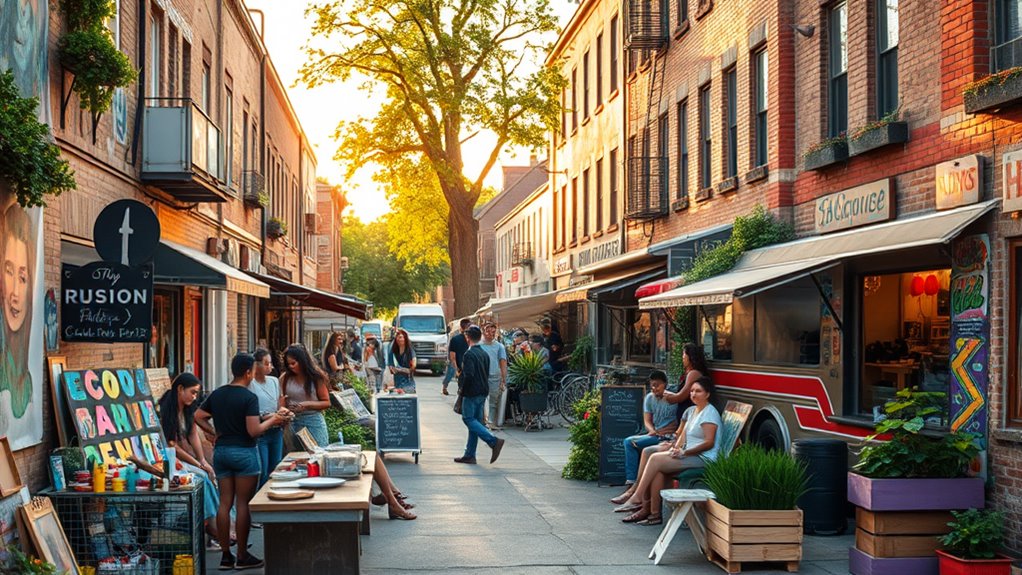
To identify up-and-coming neighborhoods, analyze demographic trends, focusing on population shifts and income levels. Look for areas with job growth potential and diverse local businesses, as these factors signal economic stability. Evaluate infrastructure improvements, particularly transportation access, which can improve property values. Moreover, consider educational institutions and community facilities, as quality schools and amenities attract families. Monitoring real estate prices and rental yields will provide insight into demand dynamics. Finally, observe cultural movements and community engagement, which indicate a vibrancy that appeals to new residents. Continue exploring these factors for a thorough grasp of neighborhood potential.
Understanding Neighborhood Trends
Comprehending neighborhood trends is vital for investors, homebuyers, and urban planners alike, as these patterns often signal the potential for growth and revitalization. A thorough comprehension of neighborhood history is fundamental in this analysis, as it provides context for current developments. Historical factors such as previous economic conditions, urban planning decisions, and demographic shifts can considerably influence the trajectory of a neighborhood.
Equally important are the community demographics, which encompass the population's age, income levels, education, and cultural backgrounds. These factors play a pivotal role in determining the neighborhood's attractiveness to prospective residents and businesses. For instance, an influx of young professionals seeking affordable housing options can lead to increased demand for local amenities, thereby promoting economic growth. Conversely, grasping any declining trends in demographics may signal potential risks for investment.
Moreover, examining local infrastructure, such as transportation networks and public services, helps investors gauge the likely desirability of a neighborhood. Areas with planned developments or improvements in public transit are often poised for appreciation, as they improve accessibility and convenience for residents.
Analyzing Local Demographics
To effectively identify up-and-coming neighborhoods, a detailed analysis of local demographics is essential. Comprehending population shifts can provide insights into areas that are attracting new residents, often indicating a burgeoning community. Pay close attention to age demographics; neighborhoods with a growing population of young professionals or families often signal potential for growth and revitalization.
Income levels play a significant role in determining neighborhood viability and can suggest where investment is likely to occur. High income levels often correlate with increased demand for housing, whereas lower income areas may show signs of gentrification. Furthermore, examining migration patterns helps identify areas where people are moving in, as opposed to those experiencing an exodus.
Diversity indexes are another valuable metric, reflecting the richness of cultural backgrounds that can improve a neighborhood's appeal. Family structures and household sizes further inform the neighborhood's dynamics, as areas with increasing numbers of families may prompt the development of more family-oriented amenities.
Education attainment and employment rates are vital indicators of the local economy's strength. Areas with higher education levels typically attract businesses and skilled jobs, improving the neighborhood's desirability. Finally, analyzing housing types can reveal trends in development, such as a shift in direction of multi-family units or single-family homes, which can influence the future character of the neighborhood. By synthesizing these demographic factors, investors and homebuyers can make informed decisions about the potential of a neighborhood to thrive.
Assessing Economic Development
Evaluating economic development is essential in identifying neighborhoods poised for growth. Key indicators such as job growth potential, infrastructure improvements, and investment trends provide valuable insights into a neighborhood's viability. By analyzing these factors, stakeholders can make informed decisions about future investments and opportunities.
Job Growth Potential
The job growth potential within a neighborhood serves as a critical indicator of its economic development and overall desirability. A robust job market not merely boosts employment opportunities but also cultivates workforce development, attracting new residents and businesses. Evaluating job growth trends can provide investors with insights into the neighborhood's future prospects.
To better comprehend the implications of job growth potential, consider the following table that outlines key factors contributing to a neighborhood's viability:
| Factor | Description | Impact on Growth |
|---|---|---|
| Industry Diversity | Presence of various sectors | Reduces economic risk |
| Educational Institutions | Proximity to colleges and training centers | Improves workforce skills |
| Business Incentives | Availability of tax breaks and grants | Attracts new businesses |
| Infrastructure | Quality of transport and utilities | Supports job accessibility |
As you assess a neighborhood, prioritize these factors to gauge its job growth potential. A strategic approach to grasping these dynamics can empower you to make informed decisions, nurturing control over your investments and future opportunities.
Infrastructure Improvements
Infrastructure improvements are crucial in driving economic development within neighborhoods, as they directly improve connectivity and accessibility. When evaluating up-and-coming areas, it is vital to examine transportation upgrades that facilitate efficient movement of residents and visitors alike. Improved public transport options and road expansions can greatly increase a neighborhood's attractiveness to potential investors and businesses.
Furthermore, the development of community amenities, such as public parks and green spaces, contributes to the overall quality of life, making the area more desirable. Effective utility upgrades guarantee that vital services are reliable, further supporting economic activities.
Pedestrian pathways and bike lanes not only promote a healthier lifestyle but additionally encourage foot traffic, which benefits local businesses. Safety improvements, such as better street lighting and traffic calming measures, create a secure environment that nurtures community engagement.
Investment Trends Analysis
Investment trends play a pivotal role in shaping the economic environment of emerging neighborhoods. By analyzing these trends, investors can identify lucrative opportunities that promise significant returns. Key factors to take into account include historical comparisons of rental yields and property appreciation rates, which provide insight into neighborhood performance over time. Additionally, grasping urban revitalization efforts can highlight areas where investment hotspots are likely to emerge.
- Zoning regulations: Assess how local policies impact property development and investment potential.
- Market forecasts: Utilize data-driven predictions to gauge future growth trends in emerging markets.
- Community engagement: Evaluate the involvement of local residents and businesses in shaping the neighborhood's future.
Investors seeking control over their investment portfolios should pay close attention to these elements. Analyzing the interplay between economic development and real estate trends will enable strategic decision-making, ultimately leading to successful investments in up-and-coming neighborhoods. By leveraging thorough data analysis, investors can navigate the intricacies of the market, ensuring they are well-positioned to capitalize on emerging opportunities while mitigating risks associated with fluctuating economic environments.
Exploring Infrastructure Improvements
As cities evolve, the importance of infrastructure improvements cannot be overstated, especially when identifying neighborhoods poised for growth. An increase in transportation upgrades, such as new transit lines or improved roadways, often signals a shift in a neighborhood's economic environment. These upgrades not just facilitate easier commuting but additionally attract businesses and residents looking for accessibility. A well-connected area can boost property values and nurture a lively community, making it a prime candidate for investment.
Community facilities play a vital role in determining a neighborhood's desirability. Access to parks, recreational centers, and educational institutions contributes to a heightened quality of life. Areas undergoing significant renovations or developments of these facilities often experience a surge in interest from prospective buyers and renters. An investment in community infrastructure indicates that local governments are committed to cultivating an environment conducive to growth, thereby increasing the appeal of the neighborhood.
Moreover, the presence of upgraded infrastructure can be indicative of broader urban planning initiatives. Strategic investments in public amenities and transportation systems signal a neighborhood's potential to become a nexus for future development. As a discerning investor or homeowner, it is fundamental to evaluate the scope and scale of these improvements. By focusing on neighborhoods with strong infrastructure upgrades, you can gain a competitive advantage in identifying areas that are not just emerging but also set to thrive in the long term.
Monitoring Real Estate Prices
Tracking real estate prices is essential for anyone looking to identify up-and-coming neighborhoods. Grasping real estate trends and price fluctuations provides invaluable insights into market dynamics. By monitoring these fluctuations, investors can pinpoint areas experiencing increasing neighborhood demand, which often leads to property appreciation.
To gain an all-encompassing view of a neighborhood's potential, consider the following strategies:
- Conduct Market Comparisons: Analyze comparable neighborhoods to evaluate sales volume and housing inventory. This helps establish benchmarks for what constitutes a competitive price in the area.
- Monitor Rental Rates: Rising rental rates can indicate strong buyer interest and a growing community, making it an attractive investment opportunity. High rental demand often correlates with an influx of residents and improved neighborhood appeal.
- Evaluate Property Appreciation: Track historical data on property values within the neighborhood. Consistent appreciation over time is a strong indicator of a sound investment, reflecting the area's desirability and growth potential.
When analyzing a neighborhood, remember to correlate these factors with external influences, such as infrastructure improvements and local amenities. By employing these strategies, you can navigate the intricacies of real estate prices with confidence, finally positioning yourself to make informed investment decisions in emerging neighborhoods.
Observing Local Business Growth
A key indicator of an up-and-coming neighborhood is the emergence of new businesses, which often signals economic importance and investment in the area. The presence of diverse retail options not only improves the local shopping experience but also attracts a broader demographic, nurturing community engagement. Furthermore, regular community events organized by local businesses can strengthen neighborhood ties and create a lively social atmosphere.
New Business Openings
Emerging neighborhoods often reveal their potential through the steady influx of new businesses, each contributing to the local economy and community vibrancy. The presence of new business openings is a vital indicator of local entrepreneurship, reflecting both the demand for services and the entrepreneurial spirit that drives innovation. This growth not only improves business diversity but likewise attracts residents and investors seeking dynamic environments.
When evaluating new business openings, consider the following key aspects:
- Types of Businesses: Look for a mix of retail, dining, and service-oriented establishments, which suggests a well-rounded economic base.
- Community Involvement: New businesses that engage with local events or initiatives often demonstrate a commitment to the neighborhood's well-being.
- Support Systems: The presence of incubators or co-working spaces indicates a supportive ecosystem for emerging entrepreneurs.
Diverse Retail Options
Observing the growth of diverse retail options within a neighborhood provides significant insights into its economic importance and community appeal. A lively mix of local markets, unique boutiques, and artisan shops signals an area that is not merely attracting consumers but also nurturing small businesses. This retail diversity improves shopping experiences, encouraging residents and visitors alike to explore various offerings.
An abundance of dining variety, from established restaurants to trendy food trucks, reflects the neighborhood's culinary topography, which can be a key factor in its desirability. Furthermore, the presence of pop-up stores indicates a dynamic entrepreneurial spirit, showcasing emerging brands and innovative concepts that resonate with the community.
Participating in community festivals further enriches the retail environment, as these events often highlight local businesses and create opportunities for engagement. As neighborhoods cultivate diverse retail options, they become more appealing to potential residents and investors. The ability to control one's shopping experience and support local enterprises nurtures a sense of ownership and pride within the community, ultimately contributing to sustained growth and liveliness. Recognizing these elements can guide informed decisions for those looking to invest in up-and-coming neighborhoods.
Community Engagement Events
Community engagement events play an vital role in nurturing local business growth and strengthening neighborhood connections. By cultivating a dynamic environment where residents and business owners interact, these events not only improve community spirit but additionally provide valuable insights into local market trends. Observing the participation and feedback from these gatherings is fundamental for identifying potential up-and-coming neighborhoods.
Participating in various community engagement events allows residents to express their needs and preferences, which in turn influences business development. Significant occasions include:
- Community festivals that celebrate local culture and attract visitors, boosting sales for nearby businesses.
- Farmer's markets that support local agriculture while creating a platform for small vendors to thrive.
- Local workshops and neighborhood meetings that encourage collaboration between residents and entrepreneurs, leading to innovative business ideas.
Moreover, cultural celebrations and social gatherings serve as an avenue for resident feedback, allowing businesses to adapt to the evolving community environment. By actively engaging in these events, one can gain a thorough grasp of a neighborhood's potential for growth, eventually making informed decisions regarding investments and involvement.
Evaluating Public Transportation Access
When considering potential up-and-coming neighborhoods, one critical factor to assess is public transportation access. Transit accessibility plays a pivotal role in determining a neighborhood's desirability and long-term growth potential. A well-connected area can greatly improve the quality of life for residents, attracting both new homeowners and renters who prioritize commuter convenience.
Evaluate the existing transportation infrastructure, including proximity to major transit lines such as buses, subways, and trains. Access to multiple modes of transportation not only provides flexibility for commuters but also reduces reliance on personal vehicles, which can be a substantial financial burden. Areas with easy access to public transport often witness a surge in demand, as they appeal to professionals who seek efficient routes to workplaces and amenities.
Furthermore, consider future transit developments slated for the area. Infrastructure investments, such as new transit stations or expansions, can indicate a neighborhood's potential for appreciation in property values. An evaluation of local government plans can provide insights into how committed authorities are to improving public transportation options.
Lastly, research the frequency and reliability of service. High-quality transit options that minimize wait times and offer consistent schedules can encourage a sense of community and stability, making the area more attractive to a diverse demographic. By thoroughly analyzing these factors, prospective buyers and investors can strategically position themselves in neighborhoods poised for growth.
Investigating Educational Institutions
The quality of educational institutions is a critical factor in evaluating the potential of emerging neighborhoods. Evaluating school performance and resources can provide insights into community investment and desirability. Furthermore, comprehending future development plans for these institutions can further illuminate the trajectory of neighborhood growth and appeal.
School Quality Assessment
Evaluating the quality of schools within a neighborhood serves as a vital factor in identifying its potential for growth and desirability. Prospective residents tend to prioritize educational institutions, as they directly influence family decision-making and community cohesion. Key indicators of school quality include school ratings, which provide a quantitative evaluation of student performance and overall effectiveness.
To gain a thorough view of a school's standing, consider the following aspects:
- Parent reviews: Insights from current and former families about their experiences can reveal strengths and weaknesses.
- Teacher qualifications: Reviewing the educational background and experience of educators can indicate the quality of instruction.
- Extracurricular activities and community involvement: Opportunities for student engagement beyond academics demonstrate a commitment to holistic development.
Furthermore, examine the availability of educational programs and after-school options, as these can improve student learning. School funding and diversity also play significant roles in shaping the educational environment. By carefully analyzing these factors, potential homeowners can make informed decisions about up-and-coming neighborhoods that align with their values and aspirations.
Future Development Plans
Grasping future development plans for educational institutions is vital for anyone considering a move to an up-and-coming neighborhood. A thorough investigation into zoning regulations reveals how local governments prioritize land use for schools, which directly influences property values and community dynamics. Comprehending government incentives can likewise illuminate potential investment opportunities that improve educational infrastructure.
Urban planning initiatives often reflect future projections regarding demographic shifts, indicating where new schools may be established or existing ones expanded. By analyzing market trends, one can gauge how these developments align with community needs, ensuring that educational institutions will be equipped to serve an increasing population.
Engaging with local community partnerships can offer insights into collaborative efforts aimed at improving educational quality and accessibility. Furthermore, keeping track of development timelines is vital, as delays or changes may impact the immediate desirability of a neighborhood.
Ultimately, a proactive approach to grasping these factors enables prospective residents to make informed decisions, ensuring that their investment meets their current needs and positions them advantageously within a swiftly evolving environment.
Recognizing Cultural and Artistic Movements
Cultural and artistic movements serve as vital indicators of a neighborhood's evolving identity and potential for growth. By examining these movements, prospective investors and residents can gain valuable insights into the vibrancy and future trajectory of an area. An influx of artistic collaborations often signals a burgeoning creative community, attracting like-minded individuals and businesses.
When evaluating a neighborhood, consider the following elements that can highlight its cultural dynamism:
- Artistic Collaborations: The presence of local artists working together on projects not only enriches the community but additionally promotes innovation. Look for studios, galleries, or co-working spaces that encourage shared creative endeavors.
- Cultural Festivals: Frequent cultural festivals signify a thriving community spirit and can be a magnet for visitors and potential residents. These events often celebrate local traditions, arts, and cuisine, showcasing the neighborhood's unique character.
- Emerging Art Spaces: New galleries, performance venues, and pop-up art installations reflect a growing appreciation for the arts. Their existence indicates a willingness to invest in cultural infrastructure, enhancing the neighborhood's appeal.
Utilizing Online Tools and Resources
How can modern technology improve our grasp of neighborhood dynamics? The digital age has equipped us with a multitude of online tools and resources that empower individuals to analyze and identify potential up-and-coming neighborhoods. By leveraging these platforms, you can gain valuable insights into various factors that influence neighborhood appeal, such as demographics, community involvement, and urban planning initiatives.
| Tool/Resource | Purpose | Benefits |
|---|---|---|
| Social Media | Gauge community sentiment and trends | Real-time feedback and engagement |
| Online Forums | Discuss neighborhood developments | Connect with local residents |
| Interactive Maps | Visualize key data points (crime, schools) | Easy to interpret geographic data |
| Real Estate Websites | Access market trends and property values | Informed investment decisions |
| Neighborhood Blogs | Explore local culture and activities | Authentic perspectives from residents |
Utilizing community platforms and local government resources can further improve your comprehension. For instance, demographic reports provide statistical analysis on population shifts, whereas data visualization tools can clarify complex urban planning information. Neighborhood blogs often present grassroots perspectives that highlight upcoming events or developments, offering a glimpse into the local culture.
Networking With Local Experts
Building on the insights gained from online tools and resources, networking with local experts can greatly improve your grasp of neighborhood dynamics. Engaging with individuals who possess firsthand knowledge of an area allows you to gather invaluable expert insights. By nurturing local connections, you can access a wealth of information that online resources may overlook.
To effectively network, consider these actionable strategies:
- Participate in community forums: These platforms enable you to ask questions and receive answers from long-term residents and local leaders.
- Attend real estate networking events: Connecting with agents, developers, and market influencers will provide you with crucial perspectives on emerging trends.
- Join local meetups or advisory groups: These gatherings offer opportunities for in-depth discussions and networking with individuals who share your interests.
Additionally, organizing or joining neighborhood tours can provide a tangible sense of the area, allowing you to explore potential investment opportunities as you gather resident testimonials. Engaging with industry panels can further improve your comprehension of the market, exposing you to varying viewpoints and strategies for success.
Frequently Asked Questions
What Are Common Signs of a Neighborhood's Gentrification?
Common signs of a neighborhood's gentrification include rising property values, which often attract new investment and development. Other gentrification indicators may involve an influx of businesses catering to a more affluent demographic, increased renovation of residential properties, and demographic shifts within the community. Moreover, improved infrastructure and amenities may signal a transformation, prompting existing residents to contemplate their long-term housing options. Comprehending these trends allows stakeholders to make informed decisions regarding investments and community engagement.
How Can I Find Upcoming Local Events in a Neighborhood?
In the lively fabric of a neighborhood, local events serve as the threads that weave community engagement and cultural identity. To discover upcoming events, consider exploring social media platforms, community boards, and websites dedicated to local businesses. Engaging directly with these establishments can yield insights into their hosted activities. Furthermore, subscribing to neighborhood newsletters can provide timely updates, ensuring you remain informed and connected to the pulse of your community.
What Role Do Social Media Trends Play in Neighborhood Development?
Social media trends greatly influence neighborhood development by enhancing community engagement and cultivating connections among residents. Platforms like Facebook and Instagram facilitate the sharing of local events, promoting awareness and participation. Additionally, social media serves as a valuable tool for gathering feedback and insights from community members, enabling stakeholders to make informed decisions. By utilizing these trends, neighborhoods can adapt to evolving preferences, in the end driving growth and attracting new residents and businesses.
How Can I Assess a Neighborhood's Safety Before Moving?
To assess a neighborhood's safety before relocating, begin by reviewing crime statistics from local law enforcement agencies, which provide insights into the frequency and types of incidents reported. Furthermore, investigate community policing initiatives, as they often indicate proactive measures taken to improve safety and promote positive relationships between residents and law enforcement. Engaging with local residents can likewise provide personal insights into the neighborhood's safety and overall community dynamics.
Are There Online Forums for Discussing Neighborhood Changes?
In the digital environment, online forums serve as lively marketplaces of ideas, where community feedback flows like a river, reflecting the pulse of neighborhood trends. Platforms such as Reddit, Nextdoor, and local Facebook groups allow residents to share insights and experiences, offering a valuable lens into ongoing changes. Engaging in these discussions empowers you to navigate the intricacies of urban evolution, ensuring you remain informed and in control of your living environment.


