Curb appeal plays a vital role in improving your home's marketability by shaping initial impressions that can influence buyer decisions. Potential buyers often form opinions within seconds, making a well-maintained exterior imperative. Elements such as color schemes, landscaping, and effective lighting contribute to an inviting atmosphere that signals quality and care. Moreover, regular maintenance of outdoor spaces sustains the property's integrity and appeal. Neglecting these aspects can lead to missed opportunities. By grasping the importance of curb appeal and focusing on strategic improvements, you can markedly boost your home's attractiveness in the competitive real estate market. Further insights await as you explore more.
Understanding Curb Appeal
Curb appeal is often an fundamental factor in attracting potential buyers to a property. This phenomenon is deeply rooted in curb appeal psychology, which suggests that the initial visual impression a home makes can markedly influence a buyer's perception of its value. A well-maintained exterior not only improves the visual attractiveness of a property but likewise signifies the level of care and maintenance that has been invested in the home.
Moreover, the aesthetics of the neighborhood play a significant role in improving curb appeal. Homes that harmonize with the surrounding environment, showcasing thoughtful landscaping and cohesive architectural styles, tend to stand out positively. Buyers are not simply purchasing a home; they are investing in a lifestyle, and a property that reflects neighborhood aesthetics can evoke feelings of belonging and desirability.
Attention to detail in the exterior elements, such as fresh paint, well-kept lawns, and inviting entryways, can create a lasting impression. This careful approach signals to potential buyers that the property is not just another house but a well-cared-for home waiting to be cherished.
Therefore, comprehending the intricacies of curb appeal is crucial for homeowners aiming to maximize their property's marketability. By strategically improving the exterior features and aligning them with neighborhood aesthetics, homeowners can exert considerable influence over how their property is perceived, eventually leading to a successful sale.
Importance of First Impressions
The significance of first impressions cannot be overstated in regard to real estate. When potential buyers approach a property, their initial perception sets the tone for their entire experience. This psychological impact is profound, as studies indicate that buyers often form opinions within seconds of seeing a home. A positive first impression can lead to a more favorable assessment of the property, influencing their enthusiasm to explore further or make an offer.
Understanding the importance of first impressions is crucial for homeowners looking to improve their marketability. Here are three key factors to reflect upon:
- Visual Appeal: The exterior of a home should exude charm and warmth, inviting buyers to step inside.
- Maintenance Signals: A well-maintained property reflects the care and attention given to it, suggesting that the interior is equally well-kept.
- Neighborhood Integration: A home that harmonizes with its surroundings boosts its desirability, making it more compelling to potential buyers.
Key Elements of Curb Appeal
A multitude of factors contribute to a home's curb appeal, each playing an vital role in attracting potential buyers. Grasping these key elements not just improves the aesthetic value of a property but can also greatly affect its marketability.
Among the most important aspects are the color schemes employed on the exterior. Choosing a harmonious palette that complements the architectural features can create a visually striking impression. Neutral tones often appeal to a broader audience, whereas bolder colors can express personality and distinctiveness, provided they are executed tastefully.
Architectural features such as the style of the roof, window designs, and door placements likewise play a pivotal role. These elements should be in alignment with the overall design of the home, creating a cohesive appearance. For instance, a Victorian home may benefit from intricate moldings and ornate details, whereas a modern abode might focus on clean lines and minimalist aesthetics.
To summarize, here's a table that encapsulates the key elements of curb appeal:
| Element | Importance |
|---|---|
| Color Schemes | Improves visual appeal and attracts diverse buyers |
| Architectural Features | Provides character and coherence to the home design |
| Landscaping | (To be discussed in next subtopic) |
| Maintenance | Indicates care and investment in the property |
Incorporating these elements thoughtfully will not just boost your home's curb appeal but will empower you in achieving a successful sale.
Landscaping Tips for Appeal
Effective landscaping improves curb appeal by focusing on practicality and aesthetics. Selecting low-maintenance plants not just reduces upkeep but furthermore guarantees a lively, welcoming environment year-round. Moreover, defining walkways with borders can create a polished look as well as guiding visitors seamlessly to your home.
Choose Low-Maintenance Plants
Choosing low-maintenance plants for your surroundings can greatly improve your home's curb appeal as you reduce upkeep. By selecting plants that require minimal attention, you can maintain a pristine environment without the burden of constant care. Incorporating drought-resistant varieties not only conserves water but also guarantees your garden thrives even in less-than-ideal weather conditions.
Consider the following benefits of low-maintenance plants:
- Drought Resistance: These plants are designed to flourish with minimal watering, making them ideal for water-conscious homeowners.
- Native Plant Benefits: Utilizing native species promotes biodiversity and supports local ecosystems, all during requiring less maintenance.
- Seasonal Interest: Choose plants that provide year-round appeal, guaranteeing your environment remains attractive through every season.
Define Walkways With Borders
How can defining walkways with borders improve the overall aesthetic of your property? Clearly delineating walkways using borders not just improves visual appeal but likewise cultivates a sense of order and definition in your surroundings. By employing a variety of walkway materials—such as stone, brick, or decorative concrete—you can create a striking contrast that draws attention as it guides visitors safely through your property.
Integrating borders into your walkway design allows for greater flexibility in design styles. For instance, a rustic stone border complements a natural environment, whereas sleek metal edging can raise a modern aesthetic. This thoughtful segmentation promotes a cohesive look and can highlight key features of your home and garden.
Moreover, well-defined walkways improve functionality, ensuring that paths remain clear and easy to navigate. This aspect is especially important during inclement weather, as proper borders help to manage water runoff and prevent erosion. In the end, investing time and resources in defining your walkways with borders not just boosts your home's curb appeal but also greatly affects its marketability, presenting a polished and inviting entrance to prospective buyers.
Exterior Home Maintenance
Although many homeowners prioritize interior renovations, neglecting exterior home maintenance can greatly diminish curb appeal and overall property value. A well-maintained exterior not only improves visual appeal but additionally signals to potential buyers that the property has been cared for over time. Establishing and adhering to a regular maintenance schedule is crucial for sustaining your home's exterior integrity and appeal.
Key aspects of exterior home maintenance include:
- Roofing and Gutters: Regularly inspect and repair any damage to your roof and gutters. This prevents leaks and water damage that could lead to costly interior repairs.
- Siding and Trim: Keep an eye on the condition of your siding and trim. Perform necessary exterior repairs and cleaning to prevent rot, mold, or insect infestations, which can greatly degrade the exterior's appearance.
- Gardening: Maintain your yard and gardens. A well-kept outdoor space not only improves curb appeal but additionally creates a welcoming environment that potential buyers will appreciate.
Painting and Refinishing Options
One of the most impactful ways to improve a home's curb appeal is through effective painting and refinishing options. The right choice in colors and finishes can greatly augment the visual attractiveness of your property, thereby increasing its marketability. Comprehending color psychology is fundamental; different colors evoke different emotions and perceptions. For instance, warm tones like reds and yellows create a welcoming atmosphere, whereas cool colors such as blues and greens can instill a sense of calmness.
To help you choose the best painting and refinishing strategies, consider the following table that outlines popular options and their psychological impacts:
| Color | Psychological Effect | Best Usage Area |
|---|---|---|
| Red | Excitement and Warmth | Entryways, Accents |
| Blue | Calmness and Serenity | Living Rooms, Exteriors |
| Green | Balance and Harmony | Gardens, Trim |
| Yellow | Happiness and Energy | Front Facades, Doors |
In addition to color selection, employing the right refinishing techniques can improve durability and aesthetics. Techniques such as sanding, staining, and sealing can revitalize wood surfaces, while pressure washing can prepare surfaces for painting. Investing time in these refinishing processes not only boosts the immediate visual appeal but also guarantees long-lasting benefits, making your home a more attractive option for potential buyers. By thoughtfully selecting colors and refinishing methods, homeowners can take control of their property's first impression.
Front Door Enhancements
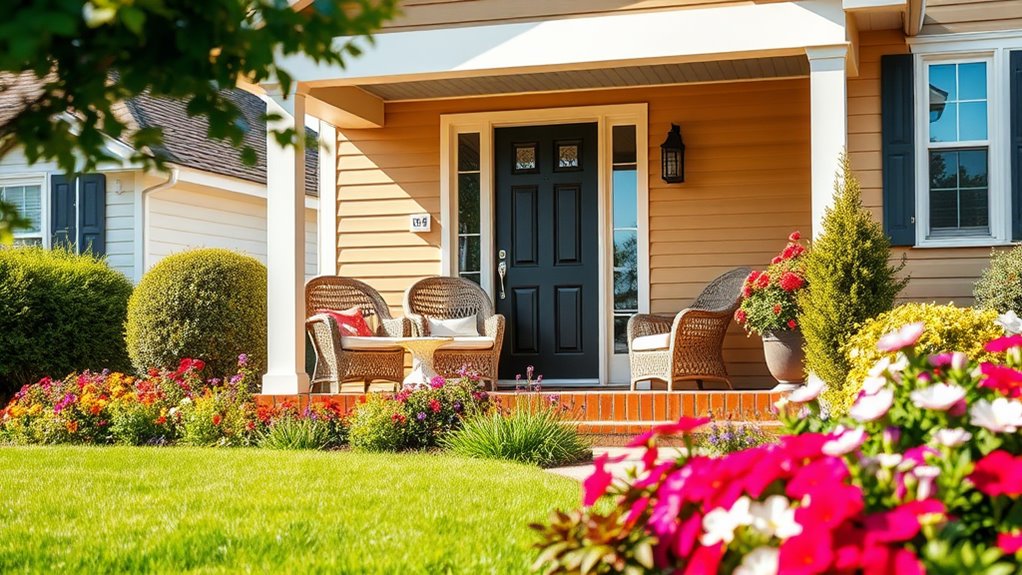
Improving your front door can significantly boost your home's curb appeal and marketability. A front door serves as the focal point of your home's exterior, and making strategic improvements can work wonders in attracting potential buyers. One of the most impactful ways to achieve this is through the selection of a compelling door color. Opting for a bold hue, such as a rich navy blue or a lively red, can create a striking first impression that captivates visitors and prospective buyers alike.
In addition to color, take into account implementing hardware upgrades. The right hardware not only adds functionality but additionally conveys a sense of quality and attention to detail. Here are a few improvements to take into account:
- Stylish Door Knobs and Handles: Choose hardware that complements your door's style and finish. A modern touch can uplift a traditional door, whereas vintage knobs can enrich the charm of a rustic entrance.
- Elegant Door Knockers: A thoughtfully selected door knocker can serve as a decorative element, providing a welcoming touch.
- Updated Hinges and Locks: Verify that your door functions smoothly with upgraded hinges and secure locks, promoting safety and ease of use.
Lighting for Curb Appeal
Effective lighting can transform your home's exterior, illuminating its best features and creating a warm, inviting atmosphere. By strategically implementing various lighting styles, you improve outdoor ambiance as well as showcasing architectural details and gardens. Decorative fixtures, such as lanterns or wall sconces, not only boost aesthetics but can improve curbside safety by ensuring pathways are well-lit.
Consider the placement of spotlight fixtures to highlight focal points, such as trees, shrubs, or unique home features. Proper garden illumination directs attention and adds depth to your property, increasing its marketability. Security benefits are a significant advantage of effective lighting; well-lit areas deter unwanted activity and provide peace of mind for homeowners.
When selecting lighting, prioritize energy efficiency to minimize operational costs. LED lights are an excellent choice, offering longevity and lower energy consumption compared to traditional bulbs. Moreover, select fixture materials that withstand the elements, ensuring durability and reducing maintenance requirements. Regular maintenance tips, such as cleaning fixtures and checking bulb functionality, will keep your lighting system operating at peak performance.
Seasonal Considerations
Homeowners' attention to seasonal considerations can greatly improve curb appeal and overall marketability. By comprehending how different seasons affect the appearance of their property, homeowners can strategically elevate their home's aesthetic appeal. Seasonal colors play a significant role in this process, as they can evoke specific emotions and attract potential buyers.
Consider the following strategies to effectively leverage seasonal considerations:
- Spring Refresh: Brighten up your surroundings with lively blooms, fresh mulch, and well-trimmed hedges. The rejuvenation of nature during spring can create an inviting atmosphere.
- Summer Liveliness: Utilize lush greenery and colorful annuals to create a spirited outdoor space. Outdoor furniture and decor should likewise reflect a relaxed, inviting vibe that resonates with summer gatherings.
- Autumn Warmth: Embrace the rich, warm hues of fall through seasonal decorations and landscaping choices. Incorporate pumpkins, hay bales, and seasonal flowers to highlight the charm of your home during this picturesque time of year.
Weather considerations should too be factored into curb appeal efforts. For instance, ensuring that walkways are clear of debris and that gutters are maintained can prevent damage and improve safety. Furthermore, adapting your exterior paint or accent colors to harmonize with seasonal palettes can create a cohesive and attractive look.
Common Mistakes to Avoid
Curb appeal can easily be compromised by common missteps that homeowners may overlook in their pursuit of an attractive exterior. The details matter; overlooking minor aspects can lead to a lackluster impression. One frequent error is ignoring symmetry, which can disrupt the visual harmony of your home. Ensuring balanced features improves appeal and draws the eye.
Excessive ornamentation may overwhelm the viewer, detracting from the overall aesthetic. Homeowners should aim for a cohesive design that reflects their style without becoming gaudy. In addition, neglecting maintenance—such as peeling paint, broken shutters, or weeds—can signal disinterest and deter potential buyers.
Color choices play a vital role in curb appeal. Poor color selections can clash with the home's architectural style or neighborhood vibe, so it's important to opt for hues that complement the property. Moreover, inadequate lighting can create a foreboding atmosphere, particularly in the evening; strategically placed lights can improve safety and highlight key features.
Mismatched styles can confuse onlookers and diminish the home's appeal. Aim for a unified design that flows seamlessly. Cluttered entryways may overwhelm visitors; instead, create an inviting space that welcomes them. Unkempt lawns communicate neglect, so regular upkeep is fundamental for a polished look. Finally, a lack of signage can hinder visibility and accessibility. Clear, attractive signage welcomes guests and aids in marketability. By avoiding these common mistakes, homeowners can greatly improve their property's curb appeal and marketability.
Cost-Effective Improvements
Cost-effective improvements can greatly improve a property's curb appeal without straining the budget. Simple landscaping upgrades, fresh paint applications, and effective lighting solutions are three practical strategies that can transform the exterior of a home. By focusing on these areas, homeowners can increase marketability and attract potential buyers.
Simple Landscaping Enhancements
Improving the terrain of a property can greatly increase its marketability without requiring a hefty investment. Simple landscaping improvements can transform your home's exterior, making it more appealing to potential buyers. By focusing on strategic upgrades, you can create an inviting atmosphere that showcases your property's best features.
Consider these effective enhancements:
- Incorporate seasonal flowers: Select colorful blooms that reflect appealing color schemes, ensuring your garden looks lively throughout the year.
- Utilize native plants: These plants are easier to maintain and promote soil health, appealing to environmentally-conscious buyers.
- Add garden art and outdoor furniture: Thoughtfully placed garden art can serve as focal points, while comfortable outdoor furniture invites buyers to envision themselves enjoying the space.
Moreover, installing vertical gardens can maximize limited space and create a unique visual appeal. In addition, exploring various mulch options not only improves aesthetics but also boosts soil health. By implementing these cost-effective improvements, you can considerably upgrade your property's curb appeal, finally positioning it as a desirable option in the market.
Fresh Paint Applications
Though many aspects of home improvement can be costly, fresh paint applications stand out as one of the most impactful and budget-friendly ways to boost a property's appeal. By selecting the right colors and finishes, homeowners can exert significant influence over potential buyers' perceptions, thereby enhancing marketability.
Color psychology plays an essential role in this process. Choosing hues that evoke positive emotions can create a welcoming atmosphere. For example, warm neutrals can convey comfort, whereas cooler tones may suggest tranquility. Comprehending the psychological effects of color enables homeowners to make informed decisions that resonate with prospective buyers.
In addition to color, the choice of paint finishes is critical. Matte finishes provide a soft, elegant look, while satin or semi-gloss options offer durability and ease of maintenance. A well-applied finish not just improves aesthetics but also protects surfaces from wear and tear.
To maximize the impact of fresh paint applications, focus on high-traffic areas such as entryways and living spaces. This targeted approach guarantees that your investment yields a noticeable improvement in curb appeal, finally contributing to a more competitive market presence.
Effective Lighting Solutions
Effective lighting solutions can greatly improve a home's aesthetic appeal in addition to remaining budget-friendly. By strategically incorporating various types of lighting, homeowners can greatly boost curb appeal and marketability without incurring substantial costs.
Consider the following cost-effective lighting improvements:
- Pathway Lights: Illuminate walkways with solar fixtures that provide ambient lighting while guiding potential buyers safely to your front door.
- Accent Illumination: Highlight architectural features or outdoor elements using outdoor uplighting and decorative lanterns, creating an inviting atmosphere.
- Security Lighting: Install outdoor sconces equipped with motion sensors and dusk sensors to improve safety and deter potential intruders, adding value to your home.
Integrating these lighting solutions beautifies your property and instills a sense of security and warmth. Proper ambient lighting creates an inviting environment, and accent illumination draws attention to your yard's best features. By implementing effective lighting strategies, you maintain control over your home's presentation, ensuring it stands out to prospective buyers. Investing in these improvements is a practical approach to boost your home's marketability in today's competitive real estate environment.
Real Estate Market Trends
The scenery of real estate market trends is constantly evolving, influenced by a myriad of factors including economic conditions, consumer preferences, and technological advancements. For homeowners and investors seeking to navigate this dynamic environment, conducting a thorough market analysis is crucial. Comprehending buyer preferences is key; potential buyers are increasingly drawn to properties that reflect modern tastes, sustainable features, and improved curb appeal.
A careful competition assessment allows sellers to position their properties strategically within the market. By analyzing neighborhood trends and pricing strategies, homeowners can effectively set property valuation levels that attract interest as well as maximizing investment returns. This informed approach reduces the risk of underpricing or overpricing, which can deter prospective buyers.
Market fluctuations present both challenges and opportunities. During periods of high demand dynamics, the implementation of effective staging techniques can greatly improve a property's appeal, making it stand out amidst competing listings. Sellers who prioritize curb appeal see substantial benefits, as first impressions can dictate buyer interest.
In these uncertain times, being proactive is crucial. By staying informed about real estate market trends, homeowners can adapt their strategies, ensuring their properties remain competitive. This adaptability not only encourages a successful sale but additionally reinforces the potential for favorable investment returns in an ever-changing market environment.
Frequently Asked Questions
How Does Curb Appeal Affect Home Appraisal Values?
Curb appeal greatly influences home appraisal values by creating a positive first impression. Well-executed landscaping tips, such as maintaining healthy lawns and colorful flower beds, improve aesthetic appeal. Furthermore, strategic exterior upgrades, like new siding or updated entryways, can raise perceived value. Appraisers often consider these elements, as they reflect the property's overall condition and desirability, eventually impacting market value. Investing in curb appeal guarantees homeowners maintain control over their appraisal outcomes.
What Are the Best Colors for Enhancing Curb Appeal?
The best colors for enhancing curb appeal are influenced by color psychology and current exterior trends. Neutral tones such as soft grays and creamy whites provide a timeless elegance, whereas rich hues like navy blue or forest green can create a striking contrast against natural scenery. Furthermore, incorporating lively accent colors, such as door shades in red or yellow, can evoke warmth and invite attention, finally empowering homeowners to make impactful aesthetic choices.
Can Curb Appeal Impact the Speed of Home Sales?
Curb appeal serves as the welcoming handshake of a home, setting the tone for prospective buyers. Effective landscaping techniques and strategic exterior lighting can greatly influence the speed of home sales, creating an inviting atmosphere that draws buyers in. Homes that exude charm and attention to detail are more likely to attract interest swiftly, enabling sellers to maintain greater control over their selling timeline and potentially secure a favorable price.
How Often Should I Update My Home's Curb Appeal?
Updating your home's curb appeal should be a regular activity to maintain its attractiveness and value. Seasonal updates, such as planting flowers in spring or adding decorative elements for fall, can improve visual appeal. Moreover, implementing affordable improvements like fresh paint or landscaping adjustments can make a significant difference. Aim for updates at least twice a year, ensuring your home consistently reflects care and attention, which promotes a sense of control over its presentation.
Does Curb Appeal Influence Buyer Emotions During Showings?
Curb appeal can wield the persuasive influence of a thousand words, greatly affecting buyer emotions during showings. Buyer psychology reveals that first impressions are critical, as emotional triggers often dictate purchasing decisions. An inviting exterior can evoke feelings of warmth and security, making potential buyers envision their future within the home. By carefully enhancing your property's curb appeal, you not just capture attention but likewise cultivate an emotional connection that can lead to a successful sale.