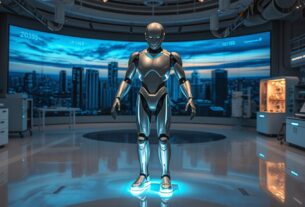
Programmers are revolutionizing art, leveraging code as a creative medium to generate innovative digital art, interactive installations, and immersive experiences. Generative art, born from algorithms and machine learning, democratizes the creative process, challenging perceptions and sparking imagination. Algorithmic artistic expression redefines digital art boundaries, and interactive installations blur the line between creator and viewer. As emotional intelligence is infused into code, installations respond to viewer emotions. The fusion of art and technology sparks a digital renaissance, and as the boundaries between art and code blur, new possibilities emerge, waiting to be explored.
Code as a Creative Medium
Programmers are increasingly recognizing code as a creative medium, one that allows them to express themselves and bring innovative ideas to life. This shift in perspective has led to a new wave of digital artists who view code as a canvas, waiting to be explored and manipulated. Code aesthetics, once a secondary concern, are now a primary focus, as programmers endeavor to create visually stunning and thought-provoking digital art.
Just as a painter wields a brush, programmers are using code to create digital brushstrokes that bring their imagination to life. These digital brushstrokes are not just functional; they're also beautiful, with clean lines, vibrant colors, and intricate patterns. The code itself becomes a form of artistic expression, with every line and symbol carefully crafted to create a unique visual experience.
As programmers continue to push the boundaries of code as a creative medium, they're discovering new ways to merge art and technology. The result is a fusion of logic and creativity, where code is no longer just a means to an end, but an end in itself. This new era of coding for creativity has opened up exciting possibilities, and it's changing the way we think about art, technology, and the intersection of both.
The Rise of Generative Art
As digital art forms continue to evolve, a new wave of creatives is turning to generative art, which harnesses the power of algorithms and machine learning to spawn unique, dynamic pieces that blur the lines between artist and machine. This emerging art form is granting artists unprecedented artistic freedom, allowing them to explore new avenues of creative expression. The Digital Renaissance is upon us, and generative art is at the forefront of this revolution.
| Generative Art Form | Key Characteristics | Artistic Possibilities |
|---|---|---|
| Algorithmic Painting | Uses machine learning to generate unique brushstrokes | Creates intricate, layered compositions that evoke human emotion |
| Neural Network Sculpture | Employs neural networks to craft 3D forms | Produces complex, otherworldly structures that defy gravity |
| Code Poetry | Utilizes coding languages to craft dynamic, interactive verse | Fosters immersive, sensory experiences that blur the lines between reader and poet |
Generative art is democratizing the creative process, enabling artists to tap into the infinite possibilities of machine learning. By embracing this synergy between human and machine, creatives are accessing new avenues of artistic expression, redefining the boundaries of what is possible. As this innovative art form continues to evolve, we can expect to see breathtaking works that challenge our perceptions and inspire our imagination. The future of art has never looked brighter.
Algorithmic Artistic Expression
Through the lens of algorithmic artistic expression, creatives are harnessing the potential of machine learning to generate novel, visually striking pieces that redefine the boundaries of digital art. This fusion of art and technology is sparking a digital renaissance, as innovators push the limits of what is achievable. The results are nothing short of breathtaking – intricate patterns, swirling colors, and mesmerizing shapes that seem to pulse with an otherworldly energy.
Algorithmic artistic expression is, fundamentally, an artistic rebellion against the conventional norms of art. It's a declaration of independence from traditional mediums, where the rules of creation are reshaped by the power of code. Programmers-turned-artists are leveraging machine learning algorithms to unveil new forms of creative expression, blurring the lines between human imagination and artificial intelligence.
As a result, digital art is experiencing a rebirth, with algorithmic art emerging as a distinct genre. This new wave of creatives is not only redefining the art world but also challenging our understanding of what it means to be creative. By tapping into the power of machines, they're opening up new possibilities for artistic expression, sparking a revolution that's set to reshape the very fabric of the art world.
Interactive Installations Evolved
Machine learning algorithms are now being integrated into immersive installations, allowing artists to craft interactive experiences that respond to viewer emotions, movements, and even biometric data. This fusion of art and technology has given rise to a new generation of digital experiences that are redefining the boundaries of creativity.
In these interactive installations, artists are leveraging machine learning to create immersive landscapes that adapt to the viewer's presence. The result is a dynamic, two-way conversation between the artwork and the observer, where the line between creator and viewer is blurred.
Here are 3 ways machine learning is elevating interactive installations:
- Emotional Intelligence: Machine learning algorithms can analyze viewer emotions, allowing the installation to respond with empathy and sensitivity.
- Biometric Feedback: Installations can incorporate biometric sensors to track viewer heart rates, skin conductance, and other physiological responses, creating a truly immersive experience.
- Personalized Interactions: Machine learning enables installations to learn from viewer interactions, adapting to individual preferences and creating a unique experience with each visit.
As these digital experiences continue to evolve, they are redefining the role of the artist, the viewer, and the artwork itself. The possibilities are endless, and the future of interactive installations has never been brighter.
Emotional Intelligence in Code
By leveraging facial recognition and sentiment analysis, programmers are now able to infuse emotional intelligence into their code, enabling installations to detect and respond to viewers' emotional states in real-time. This capability marks a significant leap forward in the domain of Code Empathy, where machines can intuitively understand and respond to human emotions. As a result, digital installations can adapt to the emotional tone of a room, creating a more immersive and engaging experience for viewers.
This newfound Digital Sentience allows artists to craft installations that are not only visually stunning but also emotionally resonant. By analyzing facial expressions, body language, and speech patterns, installations can modulate their behavior to create a more empathetic and responsive environment. For instance, an installation might adjust its color palette, soundscapes, or even scent emissions to create a calming atmosphere when it detects viewer anxiety.
The implications of this technology are far-reaching, enabling the creation of more empathetic and human-centered digital experiences. As programmers continue to push the boundaries of Code Empathy, we can expect to see a new wave of innovative installations that not only dazzle the senses but also touch the heart.
Data-Driven Artistic Storytelling
Programmers are pushing the boundaries of storytelling by leveraging data to craft immersive narratives. Through data-driven artistic storytelling, they're creating visual representations of emotional landscapes, designing narratives informed by data insights, and even generating algorithmic poetry. By exploring the intersection of code and creativity, they're opening up new avenues for artistic expression.
Visualizing Emotional Landscapes
Artists are leveraging data visualization to craft immersive emotional landscapes, where intricate patterns and vibrant hues evoke a visceral response from the viewer. This innovative approach to art-making combines the precision of coding with the expressiveness of human emotion. By mapping internal experiences onto visual representations, artists are creating new ways to communicate and connect with their audience.
Here are three ways artists are pushing the boundaries of visualizing emotional landscapes:
- Emotional Cartography: Artists are using geographic information systems (GIS) to map emotions onto physical landscapes, creating a new form of psychological topography.
- Data-Driven Abstractions: By analyzing emotional responses to color and pattern, artists are generating abstract visualizations that evoke specific emotional responses.
- Interactive Emotional Landscapes: Using virtual reality (VR) and augmented reality (AR) technologies, artists are creating immersive experiences that allow viewers to step into and explore emotional landscapes.
These innovative approaches are expanding the possibilities of artistic expression and enabling new forms of emotional connection.
Data-Informed Narrative Design
Data-driven narrative design is revolutionizing storytelling, as creatives harness the power of data to craft rich, nuanced, and deeply personal narratives that resonate with audiences on a profound level. By leveraging data journalism, storytellers can uncover hidden patterns and insights that inform their narrative frameworks. This fusion of data and storytelling enables creatives to craft more accurate, empathetic, and impactful stories that speak directly to their audience's experiences. Storytelling frameworks, once rigid and formulaic, are now being rewritten to incorporate data-driven insights, allowing for more dynamic and responsive narratives. As a result, audiences are treated to immersive experiences that not only entertain but also educate and inspire. The intersection of data and storytelling has opened up new avenues for creative expression, and it's an exciting time for innovators to push the boundaries of what's possible.
Algorithmic Poetry Generation
As storytellers continue to push the boundaries of data-informed narrative design, they're now exploring the potential of algorithmic poetry generation to create innovative, machine-made verses that blur the lines between human creativity and artificial intelligence. This emerging field combines the precision of coding with the expressiveness of poetry, yielding unique and enthralling results.
By leveraging machine learning algorithms and natural language processing, programmers can generate poetry that's both aesthetically pleasing and intellectually stimulating. These algorithms can analyze and mimic poetic syntax, linguistic patterns, and even emotional resonance, creating verses that resonate with readers.
Here are three ways algorithmic poetry generation is revolutionizing the art form:
- Experimentation with form: Algorithmic poetry can produce unconventional structures, challenging traditional notions of poetry and pushing the boundaries of language.
- Collaborative creativity: Humans and machines can collaborate to generate poetry, fostering a new era of artistic cooperation.
- Data-driven inspiration: Algorithmic poetry can tap into vast datasets, drawing inspiration from the world around us and reflecting the complexities of modern life.
The Future of Digital Sculpting
As programmers continue to push the boundaries of digital art, they're exploring new ways to revolutionize digital sculpting. The next generation of digital sculptors will likely harness the power of virtual reality integration, artificial intelligence assisted design, and real-time 3D modeling to create unprecedented levels of realism and interactivity. By combining these innovative technologies, artists will be able to craft immersive experiences that blur the lines between the physical and digital worlds.
Virtual Reality Integration
What role will virtual reality play in revolutionizing the digital sculpting landscape, and how will programmers drive this innovation? As VR technology advances, it's becoming increasingly accessible to artists and designers. Programmers are now integrating VR into digital sculpting, creating immersive experiences that blur the lines between reality and fantasy.
Here are three ways VR is transforming digital sculpting:
- VR Accessibility: With VR, artists can create three-dimensional models in a fully immersive environment, enhancing their creative process and improving their work.
- Immersive Therapy: VR integration in digital sculpting can also be used therapeutically, providing a calming and meditative experience for artists and designers.
- Enhanced Collaboration: VR enables real-time collaboration between artists, allowing them to work together on complex projects in a shared virtual space.
Artificial Intelligence Assisted Design
How will artificial intelligence transform the future of digital sculpting, and what role will programmers play in harnessing its creative potential? As AI technology advances, it's likely to revolutionize the field of digital sculpting, enabling artists to create complex, detailed designs with unprecedented speed and accuracy. Programmers will play a pivotal role in developing AI partnerships that empower artists with creative autonomy, allowing them to focus on high-level creative decisions while AI handles the intricacies of design.
| AI-Assisted Design Benefits | Programmer's Role |
|---|---|
| Enhanced Efficiency | Develop algorithms to streamline design processes |
| Increased Accuracy | Create AI models that minimize human error |
| Unparalleled Complexity | Collaborate with artists to push the boundaries of digital sculpting |
Real-Time 3D Modeling
Real-time 3D modeling is poised to revolutionize digital sculpting by empowering artists to shape and mold virtual objects in real-time, freeing them from the constraints of traditional workflows. This technology enables artists to experiment and iterate on their designs without interruptions, allowing for a more fluid and intuitive creative process.
With real-time 3D modeling, artists can:
- Optimize polygon counts on the fly, ensuring smooth performance and efficient rendering.
- Dynamically adjust topology, allowing for complex shapes and organic forms to emerge from simple gestures.
- Instantly visualize changes, seeing the results of their creative decisions in real-time.
Code-Generated Music Landscapes
Programmers are crafting immersive sonic experiences by generating music landscapes through code, blurring the lines between art and algorithm. This innovative approach allows for the creation of complex, dynamic soundscapes that transcend traditional music composition. By leveraging algorithms and data structures, programmers can generate music that adapts to various environments, moods, and emotions.
In the domain of code-generated music landscapes, sonic topology plays an essential role. This emerging field combines music theory, mathematics, and computer science to create intricate networks of sound. Programmers employ techniques like graph theory and network analysis to design sonic topologies that evoke specific emotions and atmospheres. For instance, a programmer might create a sonic topology that mimics the eerie ambiance of a futuristic cityscape or the vibrant energy of a tropical rainforest.
Musical cartography, another key aspect of code-generated music landscapes, involves mapping sound patterns onto visual representations. This innovative approach enables programmers to visualize music as a spatial entity, allowing for a deeper understanding of sonic structures and relationships. By merging musical cartography with sonic topology, programmers can craft immersive audio experiences that transport listeners to new dimensions. As the boundaries between music, art, and code continue to blur, the possibilities for creative innovation are endless.
Virtual Reality as Canvas
Virtual reality is becoming a dynamic canvas for coders, who are harnessing the power of algorithms to generate immersive, interactive art that redefines the boundaries of creativity. By leveraging VR technology, programmers are crafting innovative virtual exhibits that transport viewers on immersive journeys through fantastical landscapes, abstract domains, and even the depths of human consciousness. These virtual exhibitions are not merely passive displays, but rather interactive experiences that respond to the viewer's movements, emotions, and thoughts.
Here are three ways coders are pushing the boundaries of VR art:
- Algorithmic brushstrokes: Coders are developing algorithms that mimic the expressive gestures of human artists, generating vibrant, dynamic patterns that evolve in real-time.
- Interactive narratives: Programmers are crafting immersive stories that unfold in response to the viewer's actions, creating a unique experience with each interaction.
- Neuro-generated art: Coders are using brain-computer interfaces to translate neural activity into stunning visualizations, blurring the lines between human creativity and machine intelligence.
As VR technology continues to advance, the possibilities for coders to create innovative, immersive art experiences are endless. The fusion of code and art is redefining the boundaries of creativity, and the results are nothing short of breathtaking.
The Math Behind Masterpieces
Programmers are discovering that math can be a powerful tool for creating stunning works of art. By harnessing algorithms, they're able to generate intricate patterns and shapes that would be impossible to produce by hand. In this domain, fractals are emerging as a key design element, adding a new layer of complexity and beauty to digital art.
Algorithms for Art
Mathematical formulas and geometric patterns hidden beneath the surface of artworks have long fascinated artists and art enthusiasts alike, inspiring a new generation of creatives to explore the intersection of art and mathematics. This fusion of disciplines has given rise to innovative algorithms that generate artistic masterpieces.
Artistic Recipes, a pioneering approach, utilizes computational brushstrokes to create intricate patterns and shapes. By feeding algorithms with specific parameters, artists can generate unique and complex designs that would be impossible to achieve by hand.
Here are three ways algorithms are transforming the art world:
- Generative Art: Algorithms can produce an infinite variety of artistic styles, from abstract patterns to realistic portraits.
- Collaborative Creativity: Humans and machines can work together to co-create art, pushing the boundaries of traditional art forms.
- Algorithmic Aesthetics: Mathematical formulas can be used to analyze and understand the underlying structures of art, revealing new insights into the creative process.
Fractals in Design
Fractals, intricate patterns that repeat at different scales, have been harnessed by designers to create visually striking and harmonious compositions. By leveraging the mathematical principles underlying fractals, designers can tap into the inherent beauty of math to craft unique and mesmerizing designs. This fusion of art and mathematics has given rise to a new genre of design, where fractal aesthetics meet math beauty.
Designers are using fractals to create intricate patterns, textures, and shapes that evoke a sense of wonder and awe. From architecture to graphic design, fractals are being used to create visually striking compositions that showcase the beauty of math. By applying algorithms and mathematical formulas, designers can generate complex patterns that would be impossible to create by hand.
The application of fractals in design has opened up new avenues for creative expression, allowing designers to push the boundaries of traditional design. As designers continue to explore the possibilities of fractal design, we can expect to see even more innovative and stunning creations that showcase the beauty of math.
Blurring Lines Between Disciplines
As artists and technologists collaborate, the boundaries between art and code begin to dissolve, revealing a new world of creative possibilities. The once-distinct lines between disciplines are blurring, giving rise to innovative artistic expressions. This Cross Pollination of art and technology has led to the development of unique and mesmerizing forms of art.
The Interdisciplinary approach has enabled artists to tap into the potential of code, creating immersive and interactive experiences. Meanwhile, programmers are drawing inspiration from the world of art, incorporating aesthetics and creativity into their work. This Artistic Crossover has resulted in the creation of breathtaking visuals, sounds, and installations that push the boundaries of human experience. This fusion of disciplines has given rise to innovative projects that blend technology and artistry in unprecedented ways. By embracing the art of UX design, creators ensure that these experiences are not only visually compelling but also intuitive and user-centric. As a result, audiences can engage with digital art on a deeper level, fostering meaningful interactions that transcend traditional mediums.
Here are three examples of Disciplinary Fusion in action:
- Generative Art: Artists are using code to create mesmerizing visuals that evolve and adapt in real-time, blurring the line between art and science.
- Interactive Installations: Programmers are collaborating with artists to create immersive experiences that respond to sound, movement, and emotion.
- Algorithmic Music: Musicians are using code to generate sounds and melodies, creating a new wave of electronic music that's both futuristic and fascinating.
As the boundaries between art and code continue to blur, we can expect to see even more innovative and groundbreaking creations. The possibilities are endless, and the future of art has never looked brighter.
Frequently Asked Questions
How Do Programmers Balance Logic and Creativity in Their Coding Process?
Programmers balance logic and creativity by embracing Algorithmic Freedom, which allows them to think outside the code. They develop a Code Philosophy that harmonizes structure and imagination, fostering innovative solutions. By merging left-brain logic with right-brain creativity, they craft unique digital experiences. This fusion enables them to break free from limitations, unleashing novel possibilities in their coding process.
Can Ai-Generated Art Be Considered Truly Creative or Just Mimetic?
As the brushstrokes of innovation dance across the digital canvas, a provocative question emerges: Can AI-generated art be considered truly creative or just mimetic? It's a conundrum that probes the very essence of artistic license. Does algorithmic originality suffice to confer creative credibility, or is it merely a clever imitation? As AI-generated art continues to blur the lines, the answer remains an enigma, leaving us to ponder the true meaning of creativity in the machine age.
What Role Does Human Intuition Play in Code-Generated Artistic Decisions?
She believes human intuition plays a pivotal role in code-generated artistic decisions, granting creative freedom to programmers. By injecting their own artistic license, they can guide algorithms to produce innovative, unique pieces. This synergy between human instinct and machine learning allows for unexpected, boundary-pushing art that redefines the creative landscape. As a result, programmers become co-creators, leveraging their intuition to reveal unprecedented artistic expressions.
How Does Coding for Creativity Impact Traditional Art Forms and Industries?
As digital tools revolutionize art, traditional forms are facing an Artistic Disruption. The Digital Renaissance is upon us, and coding for creativity is at the forefront. Programmers are innovating art, pushing boundaries, and redefining what's possible. This shift is impacting traditional art forms and industries, forcing them to adapt or risk being left behind. The fusion of code and art is creating new opportunities, but also sparking concerns about the role of human creativity in this brave new world.
Can Coding for Creativity Be Taught or Is It an Innate Skill?
Can creative coding be taught, or is it an innate skill? Experts argue that it's a mix of both. While some people naturally excel in creative problem-solving, coding for creativity can be developed through skill development and practice. By fostering a growth mindset, individuals can tap into their creative potential. With guided training and experimentation, anyone can cultivate the skills necessary to bring innovative ideas to life.