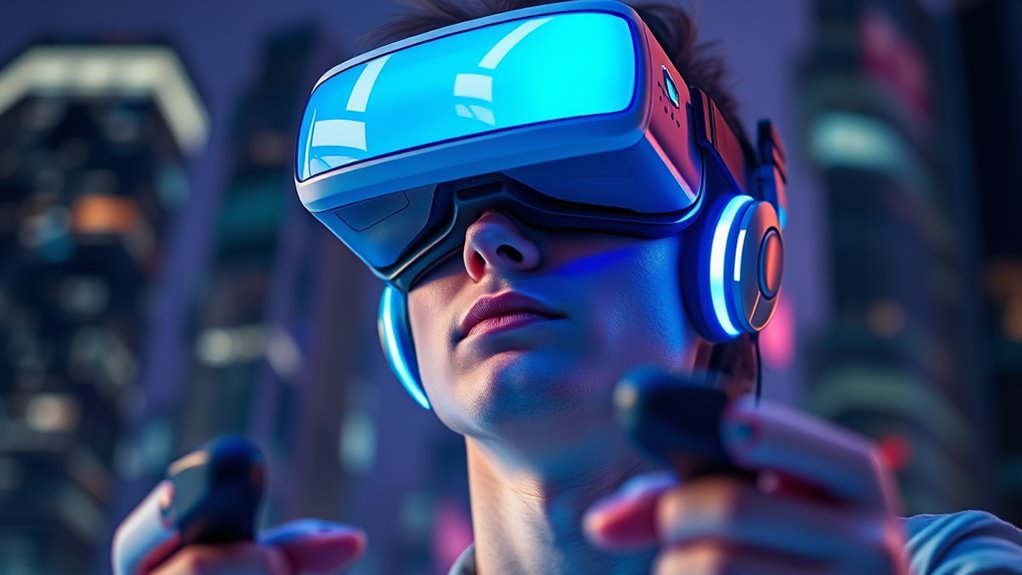
Virtual reality transforms entertainment and beyond by providing immersive experiences. In gaming, VR creates realistic environments, whereas in film, 360-degree filming allows viewers to explore freely. Theater performances additionally become more interactive, blurring reality-fantasy boundaries. Music festivals, education, and even healthcare benefit from VR's immersive qualities. Architects and real estate agents utilize VR to showcase designs and properties remotely. Virtual travel and tourism save on costs whilst preserving cultural experiences. As VR technology advances, its influence will continue to expand – and by exploring further, the full extent of its impact and potential can be realized.
Changing the Entertainment Industry
Within the swiftly evolving entertainment industry, virtual reality (VR) is emerging as a game-changer, revolutionizing the way people experience and interact with content. By providing immersive experiences, VR technology has the potential to redefine the entertainment environment, offering unparalleled audience engagement. Content creators are leveraging VR to craft unique and enthralling stories that transport viewers into new worlds.
The impact of VR on content creation is significant, as it empowers creators to push the boundaries of storytelling. With VR, artists can experiment with innovative formats, such as interactive experiences and 360-degree narratives. This shift in content creation enables audiences to become active participants, rather than passive viewers, nurturing a deeper connection with the content.
As VR technology continues to advance, it’s likely to democratize the entertainment industry, providing new opportunities for independent creators to reach a wider audience. The rise of VR additionally raises questions about the future of traditional entertainment formats, such as film and television. Although it’s uncertain how these formats will evolve, it’s clear that VR will play a significant role in shaping the entertainment industry’s future. As developers push the boundaries of immersive experiences, the future of VR and AR holds the potential to revolutionize storytelling, making narratives more interactive and personalized. This shift could lead to entirely new genres of entertainment that blend virtual and augmented realities, offering audiences deeper levels of engagement. As a result, traditional media producers may need to adapt by integrating these technologies into their content strategies to stay relevant in an evolving industry.
Virtual Reality in Gaming
The integration of virtual reality (VR) technology in gaming has transformed the way people play and interact with games. By creating an immersive gaming experience, VR gaming allows players to feel as if they're inside the game itself, interacting with virtual objects and environments in a more realistic way. With improved visual realism, VR games can transport players to new and imaginative worlds, offering unparalleled levels of engagement and entertainment.
Immersive Gaming Experience
Advancements in virtual reality technology have transformed the gaming industry, giving birth to immersive gaming experiences that transport players to new worlds. These experiences aren't just about engaging visuals, but additionally about sensory engagement, allowing players to feel as if they're an integral part of the game. Social interaction is also a key aspect, as players can engage with others in real-time, nurturing community building and competitive gameplay.
Narrative immersion is another vital element, as VR games can draw players into the story like never before. Player agency is likewise heightened, as gamers have the freedom to make choices that impact the game world. This, in turn, creates an emotional connection with the game, making the experience even more immersive. Adaptive environments also play a significant role, as they respond to the player's actions, creating a sense of realism. By combining these elements, VR gaming experiences offer a level of freedom and engagement that traditional gaming can't match, allowing players to explore new worlds and connect with others in ways they never thought possible. This new level of interaction is revolutionizing the gaming industry.
Enhanced Visual Realism
Improved visual realism in VR gaming raises the immersive experience, drawing players deeper into the virtual world. As VR technology advances, gamers are treated to photorealistic graphics that blur the line between reality and fantasy. This level of visual fidelity is made possible by sophisticated graphics processing units (GPUs) and advanced rendering techniques.
| Feature | Description |
|---|---|
| Advanced Lighting | Real-time lighting effects that simulate real-world conditions |
| Dynamic Textures | High-resolution textures that adapt to changing environments |
| Physics-Based Rendering | Accurate simulation of real-world physics and materials |
| Realistic Shading | Advanced shading techniques that create realistic depth and dimension |
Interactive environments are another key aspect of improved visual realism in VR gaming. Players can explore and interact with virtual worlds in a way that feels intuitive and immersive. By leveraging advanced physics engines and AI-powered NPCs, gamers can engage with virtual environments that feel alive and responsive. The result is a more engaging and realistic gaming experience that sets the stage for new levels of immersion and interactivity.
Revitalizing the Film Industry
Virtual reality is revolutionizing the film industry by offering immersive experiences that transport viewers into the heart of the story. This shift is enabling filmmakers to push the boundaries of storytelling and create more engaging experiences for their audiences. Interactive storytelling is becoming increasingly popular, allowing viewers to influence the narrative and become an integral part of the story. This level of audience engagement is unparalleled in traditional filmmaking, where the viewer is a passive observer.
The use of VR technology is also enabling filmmakers to experiment with new formats and styles. For example, some films are now being shot in 360 degrees, allowing the viewer to look around and explore the environment. This creates a sense of freedom and agency, as the viewer is no longer limited to a fixed perspective. Furthermore, VR films can be designed to respond to the viewer's actions, creating a more dynamic and immersive experience.
The impact of VR on the film industry is not limited to the creative side. The technology is likewise opening up new opportunities for distribution and marketing. For example, VR experiences can be used to promote films and create buzz around new releases. This can be especially effective for independent filmmakers who may not have the same marketing budgets as larger studios.
Immersive Theater Experiences
Theaters, once limited by their physical stages, are now broadening their creative horizons with immersive VR experiences. This shift allows for interactive storytelling, where audiences participate in the narrative, influencing the performance in real-time. By putting on VR headsets, viewers become an integral part of the play, nurturing a deeper emotional immersion and character connection.
Immersive theater experiences are all about sensory engagement. The combination of 3D visuals, spatial audio, and haptic feedback creates an environment that simulates reality. This enables audience members to explore narratives in ways that were previously impossible. Performers, too, benefit from VR technology, as they can now collaborate with their virtual counterparts in innovative ways.
Environmental design plays a significant role in immersive theater, as the virtual world is carefully crafted to transport the audience to new and imaginative domains. Live interaction between performers and the audience adds an extra layer of excitement, as the boundaries between reality and fantasy blur. By leveraging VR, theaters can now push the limits of storytelling, experimenting with novel formats and narrative structures.
As immersive theater experiences continue to evolve, they're likely to redefine the way we engage with live performances. With VR, the possibilities for narrative exploration are endless, and the connection between the audience and performers will only continue to deepen. Theaters are now free to experiment and innovate, unshackled by the constraints of traditional stages.
The Future of Music Festivals
Beyond the confines of traditional outdoor venues, music festivals are on the cusp of a revolution, thanks to the integration of virtual and augmented reality technologies. This new era of music festivals offers virtual lineups, where attendees can experience performances from anywhere in the world, without geographical constraints. Digital interactions between artists and fans are likewise on the rise, allowing for more intimate and engaging experiences.
Immersive environments and augmented experiences are being designed to transport festival-goers to new and fantastical worlds. These sensory experiences are not merely limited to the music, but also to the art, food, and overall atmosphere of the festival. Social connectivity is similarly being redefined, as attendees can connect with others from around the globe, creating a sense of community and shared experience.
The integration of virtual and augmented reality technologies additionally increases festival accessibility, allowing people with disabilities or those who cannot physically attend to participate and engage with the festival. Tech integration is key to the success of these new music festivals, and creative collaborations between artists, technologists, and festival organizers are leading to innovative and groundbreaking experiences. As the music festival industry continues to evolve, one thing is clear – the future of music festivals is virtual, immersive, and limitless.
Educational Applications of VR
Educators and institutions are utilizing the strength of VR technology to transform the learning experience, offering immersive and interactive environments that make complex concepts more engaging and accessible. This shift in the direction of interactive learning enables students to take an active role in the educational process, nurturing a deeper comprehension of the subject matter. Virtual classrooms are becoming increasingly popular, allowing students to participate in experiential education from anywhere in the world.
VR technology is also being used to provide skill training in various fields, such as aviation, healthcare, and the military. Historical simulations are another area where VR is making a significant impact, allowing students to explore and interact with historical events in a unique and engaging way. Furthermore, VR is providing accessibility improvements for students with disabilities, enabling them to participate in educational experiences that may have been previously inaccessible.
Language immersion programs are similarly becoming more prevalent, allowing students to practice and refine their language skills in a virtual environment. Collaborative projects are likewise on the rise, enabling students to work together on complex tasks and share ideas in a virtual space. By leveraging the strength of VR, educators and institutions are creating a more inclusive, engaging, and effective learning environment that empowers students to reach their full potential. As VR technology continues to evolve, it's likely that we'll see even more innovative applications in the field of education.
Healthcare and Medical Training
As VR technology continues to improve learning experiences in various fields, its applications in healthcare and medical training are gaining significant attention. Medical professionals are leveraging VR to boost patient care, improve treatment outcomes, and increase the efficiency of medical procedures. By providing immersive and interactive experiences, VR is revolutionizing the way healthcare professionals are trained and patients are treated.
Some of the key applications of VR in healthcare and medical training include:
- Surgical simulations and procedure rehearsals: allowing surgeons to practice complex procedures in a safe and controlled environment, reducing the risk of complications and improving patient outcomes.
- Patient education and rehabilitation therapies: empowering patients to take control of their health and recovery through interactive and engaging educational experiences.
- Anatomy visualization and empathy training: providing healthcare professionals with a deeper comprehension of human anatomy and improving their ability to connect with patients on an emotional level.
VR is additionally being used to support mental health treatment, remote consultations, and other healthcare services. By providing a more immersive and engaging experience, VR is helping to break down barriers and increase access to healthcare services. As VR technology continues to evolve, its potential to transform the healthcare industry is vast and exciting, offering new opportunities for medical professionals to improve patient care and outcomes.
Impact on Architecture Design
Frequently, architects and designers find themselves limited by two-dimensional blueprints and static presentations when trying to communicate their vision to clients. Virtual reality (VR) has transformed the architecture design process by offering immersive and interactive experiences that amplify design creativity and spatial awareness. With VR, architects can now engage clients in the design process more effectively, promoting a deeper comprehension of the project's vision and goals.
| Design Aspect | Traditional Method | VR-Enhanced Method |
|---|---|---|
| Client Engagement | Limited to 2D blueprints and static presentations | Immersive and interactive experiences |
| Design Creativity | Restricted by traditional visualization tools | Unlimited possibilities in virtual environments |
| Spatial Awareness | Difficult to convey through 2D representations | Accurate and intuitive perception of spaces |
| Architectural Visualization | Time-consuming and costly to create physical models | Rapid and cost-effective creation of virtual models |
| Collaborative Design | Limited by geographical distance and time zones | Seamless and real-time collaboration in virtual environments |
Virtual Travel and Tourism
Within the domain of entertainment, virtual reality is revolutionizing the way we experience travel and tourism. Virtual tours and destination experiences are now accessible from anywhere in the world, providing people with the freedom to explore new places without the need for physical travel. This shift in travel and tourism is not merely changing the way we experience different cultures, but it is additionally promoting cultural immersion.
Virtual reality travel simulations are allowing people to explore different destinations and experience various forms of adventure exploration. For instance, historical reconstructions of ancient cities are giving people a glimpse into the past, allowing them to walk through historical sites and experience what life was like during that time.
Some of the key benefits of virtual travel and tourism include:
- Personalized itineraries: Virtual reality travel experiences can be customized to individual preferences, allowing people to create personalized itineraries that cater to their interests.
- Environmental awareness: Virtual travel reduces the need for physical travel, which can help reduce carbon emissions and promote environmental awareness.
- Accessibility improvements: Virtual reality travel experiences can be accessed by anyone with a VR device, making travel more accessible to people with disabilities or those who cannot afford to travel physically.
Real Estate and Property Viewing
Numerous industries are embracing the potential of virtual reality, and the real estate sector is no exception. Virtual reality is transforming the way properties are viewed, marketed, and sold. Virtual tours allow buyers to explore properties remotely, reducing the need for physical visits and saving time. This technology likewise enables property staging, where virtual furniture and decor can be added to empty spaces, giving buyers a better sense of the property's potential.
Remote collaboration is another benefit of virtual reality in real estate. Agents and clients can work together in real-time, exploring properties and discussing features and flaws. This technology also improves buyer engagement by providing an immersive experience that nurtures a deeper connection with the property. Market analysis is additionally enhanced, as virtual reality allows for the creation of interactive 3D models and data visualizations that help agents and investors understand market trends and identify investment opportunities.
Design visualization is another key application of virtual reality in real estate. Architects and designers can create detailed, interactive models of properties, allowing clients to explore and provide feedback on the design. This technology also raises the client experience, providing a unique and engaging way to explore properties. By leveraging virtual reality, the real estate industry can provide a more immersive, interactive, and personalized experience for buyers and investors, eventually driving sales and growth. Virtual reality is poised to transform the way we buy, sell, and interact with properties.
Frequently Asked Questions
Can VR Headsets Cause Eye Strain or Vision Problems?
She's aware that VR headsets can pose risks to eye health and visual comfort. Prolonged use may cause eye strain, dryness, and irritation. VR users are likewise at risk of myopia, or nearsightedness, particularly if they're young. Nevertheless, manufacturers are working to minimize these risks by implementing features like eye-tracking technology and adjustable displays. By taking regular breaks and following guidelines, she can enjoy VR as she safeguards her eye health.
Are VR Systems Compatible With All Operating Systems?
She values her freedom to choose her operating system, so she's glad to know that many VR systems offer cross-platform support. They're compatible with popular operating systems like Windows, macOS, and Linux. This compatibility allows her to pick the OS that suits her needs without limiting her VR options. With this flexibility, she can focus on exploring new virtual worlds, not worrying about system requirements.
Can I Use VR With Prescription Glasses or Contacts?
Like a key opening a door to limitless possibilities, virtual reality is breaking free from previous limitations. For those who wear prescription glasses or contacts, VR can be a liberating experience. Most VR systems are compatible with prescription glasses, and some even offer comfort-focused designs, ensuring a snug fit. Others provide prescription lens inserts for added convenience. With VR, users can now immerse themselves freely, without worrying about their vision holding them back.
Are VR Headsets Suitable for People With Epilepsy?
She's free to explore virtual worlds, but epilepsy symptoms require caution. VR headset manufacturers advise people with epilepsy to consult their doctors before using the devices. Safe usage is vital to avoid triggering seizures. Some VR headsets offer epilepsy-friendly settings, reducing flash frequency and intensity. Nevertheless, it's important to follow the guidelines and take regular breaks to guarantee a fun and safe VR experience.
Can I Use VR While Standing or Moving Around?
She's ready to take the leap into a world of limitless possibilities. In terms of using VR, she can certainly cut loose and move around. Many VR headsets and systems are designed to support standing experiences, offering movement tracking that allows her to physically interact with virtual environments. With these capabilities, she can freely roam, dance, or even exercise in immersive worlds, releasing her full range of motion.